Satellite News

Just another satellite weblog

Archive for July 20th, 2026

Should we trust AI in the search for alien life? Scientists aren’t so sure

July 20th, 2026 by me

Artificial intelligence could easily fall into the trap of identifying non-life as life on other worlds, claim two researchers from Michigan State University who have tested AI on simulated life in a computer program.

“We had previously seen that AI has a big Achilles heel when it is trying to classify things that are unlike the things in its training examples,” Michigan’s Christoph Adami told Space.com. “We call these ‘out-of-distribution’ samples and it is just incredibly easy to get AI to misclassify.”

Adami is a computational biologist who uses computers to apply information theory to the study of evolution and biology. One of his leading tenets is that life can be defined by its ability to encode information and replicate it. To this end, he devised the Avida computer program in 1993. It runs digital organisms written as code that can replicate by copying themselves and competing for resources — in this case, CPU time — just like real life organisms. Although the use of digital life in evolutionary studies remains controversial, what it does provide Adami with is a huge dataset of simulated lifeforms that AI can be tested on.

Spending three months of computer analysis on a thousand parallel machines, Adami and his student Ankit Gupta asked AI to determine which programs in Avida had the properties of life, and which didn’t. The life and non-life programs have very similar coding, so the difference is not obvious — and this might very well be the case on another planet where life could have differences in biology to Earth life.

Adami and Gupta started out with programs representing a random sequence of molecules and asked the AI to classify them. They then set about tweaking that sequence of molecules to try and fool the AI into thinking it was seeing life, one change at a time, each time checking whether there had been a change in how confident the AI was that it was life or non-life.

“Within about 15 changes or so we can get AI to be perfectly confident of a life classification when in fact not a single time when it was being 100% confident was it actually life,” said Adami.

Furthermore, no matter the sequence they started with, the AI was constantly fooled.

Many in the scientific community stand by AI as an invaluable tool because it can process huge amounts of data and search for patterns in that data. Adami himself believes that AI has an important role to play, but as we see in everyday life, AI is prone to making things up and identifying patterns that don’t exist.

Digital organisms replicating and mutating over time in the Avida program. Each colored dot represents an organism of a particular genotype, and each time they mutate into a different type, they change color. (Image credit: Adami et al/Michigan State University)

This really comes down to what the AI has been trained on, said Adami. If you ask an AI about data it has been trained on, it usually provides a correct answer. For example, if you train AI to identify pictures of apples and then ask it to pick out the fruit from a dataset that also includes pictures of non-food items, it will answer correctly virtually all the time. However, if you replace the apple pictures with photos of bananas and ask it to identify the fruit, it will struggle and start to misidentify things.

That’s because the bananas represent “out of distribution” data. The AI wasn’t trained on bananas, which are a very different shape to apples, and therefore the AI doesn’t know what to make of them.

Similarly, we don’t know what alien microbes will look like, and they could be quite different to the terrestrial microbes that the AI has been trained on. In other words, the alien life would be out of distribution, and the AI would have no context for saying whether any particular collection of molecules is life or not.

“You need to know your training data, and if you know that your testing data is part of the same distribution as the training data, then you’ll be fine,” said Adami. “But you can’t guarantee that with extraterrestrial life.”

This could pose a problem for missions designed to look for life.

If a Mars rover goes to the red planet and cuts open a rock and directly sees something that looks like microbial life as we know it, then the answer will be clear-cut and can be tested using traditional methods. However, many attempts to detect life will probably not be so hands-on, relying on mass spectrometry data to identify molecules and processes related to life. This could range from attempts to detect life in the atmosphere of Venus, or in the ocean of Europa, or on exoplanets via the Habitable Worlds Observatory, which NASA aims to launch in the 2040s to directly image exoplanets in the habitable zone of stars.

“This means that if there were an AI on a mission looking at particular mass spectrometry samples, then there’s a very great chance that while it has been trained on the ground on a number of biotic and abiotic samples, it could still return a positive verdict when it has absolutely nothing to do with life,” says Adami.

The next step, said Adami, is to move out of the digital world and run the same test with real-world data.

Adami and Gupta will be presenting their findings in August at the 2026 Conference on Artificial Life, which is being held in Waterloo, Canada.

Category: NEWS | No Comments »
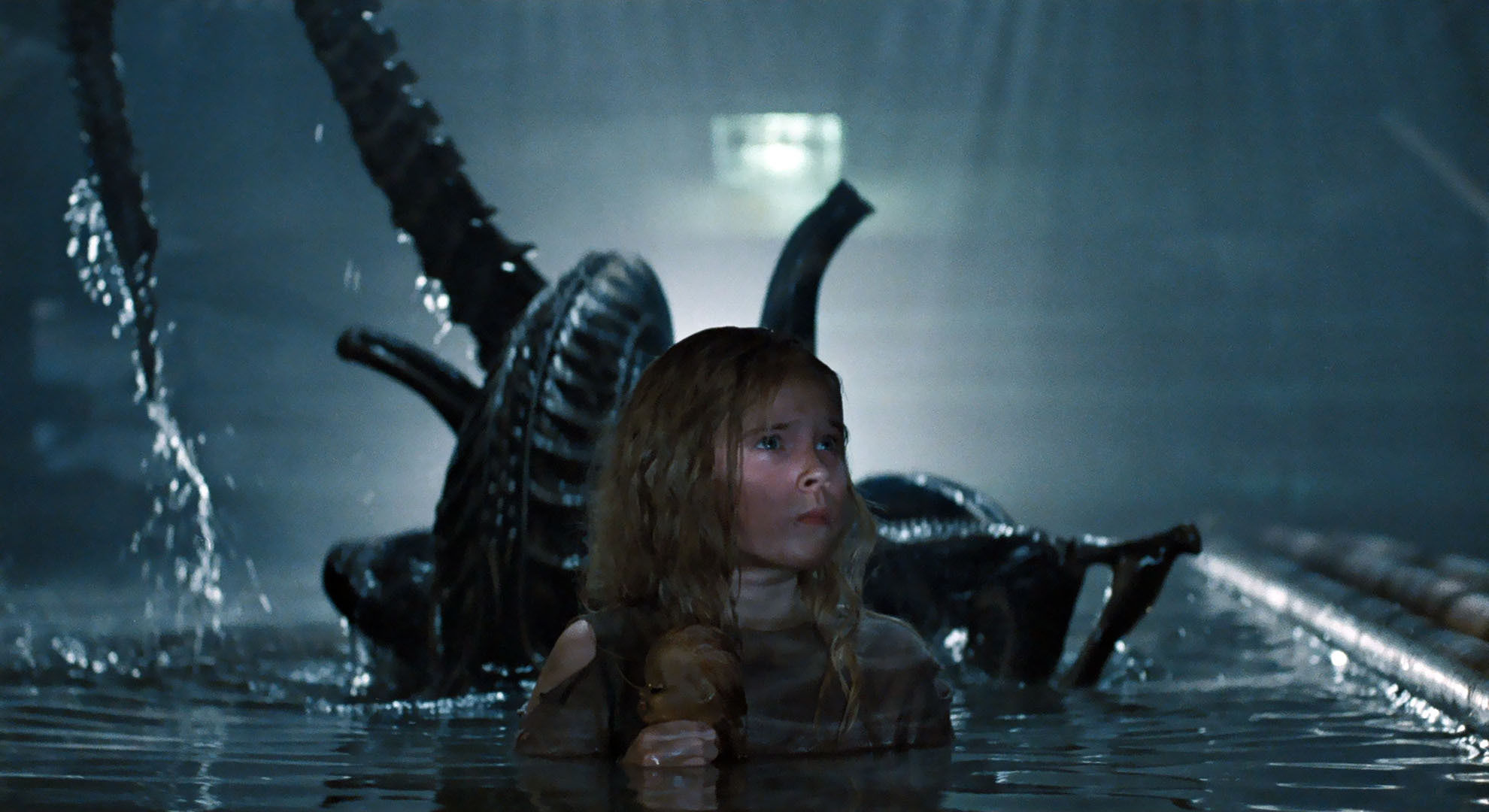
‘Aliens’ at 40: James Cameron’s sequel is a sci-fi icon, but did you know he quit the movie twice?

July 20th, 2026 by me

Where does James Cameron’s “Aliens” rank among the other Alien movies? That depends on who you ask. Some might say it’s the best, while others put it just behind the original (spoiler alert: it’s the best). Regardless, there’s no denying that this 1986 film shifted gears, moving the franchise from horror to horror-tinged sci-fi action and paving an alternate path for the future.

As Cameron stated in an interview with Lofficier, the plan always was “to do a film that was not as scary… it’s scary, but it’s not as scary, but more intense, and I like to use the word, exhilarating. Because I think you get exhilarated by the intensity of the kind of action that’s in this film.”

In terms of story progression, the sequel’s shake-up makes complete sense. Sigourney Weaver’s Ellen Ripley survived the Xenomorph in “Alien”, but now she must conquer her fears and face the grim creature once again. This time, she has allies and firepower on her side, though most of those Colonial Marines turn out to be about as useful as French kissing a beehive.

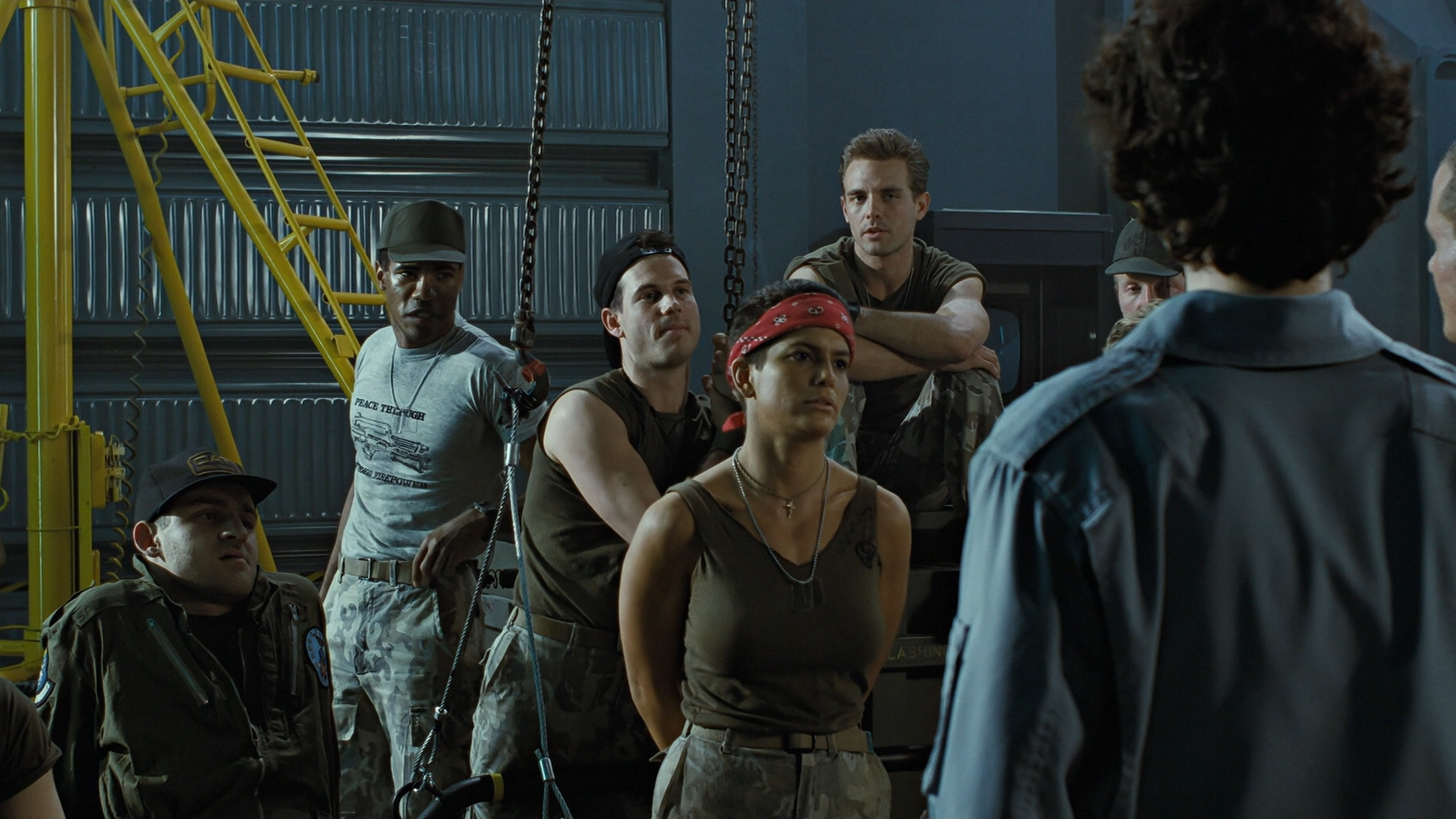
Screenshot from the sci-fi movie Aliens (1986)

(Image credit: 20th Century Fox)

“Aliens” exploded into a monster hit, both financially and critically, suggesting that Cameron has a Midas touch when it comes to sequels. Famous movie critic Roger Ebert called it “a superb example of filmmaking craft”, and it’s tough to argue that point. Yet what’s amazing to ponder is how “Aliens” nearly fell apart several times before it actually happened.

Despite 1979’s “Alien” turning a big profit on paper, Hollywood’s accounting practices are more baffling than Palpatine’s return in “Star Wars: The Rise of Skywalker”.

Somehow, “Alien” was deemed a flop, and 20th Century Fox remained conflicted about a sequel – so much so that it almost sold the rights to the “Rambo” producers of all people (imagine the crossover potential, though, as John Rambo guns down a horde of Xenomorphs while Jerry Goldsmith’s iconic score blares in the background).

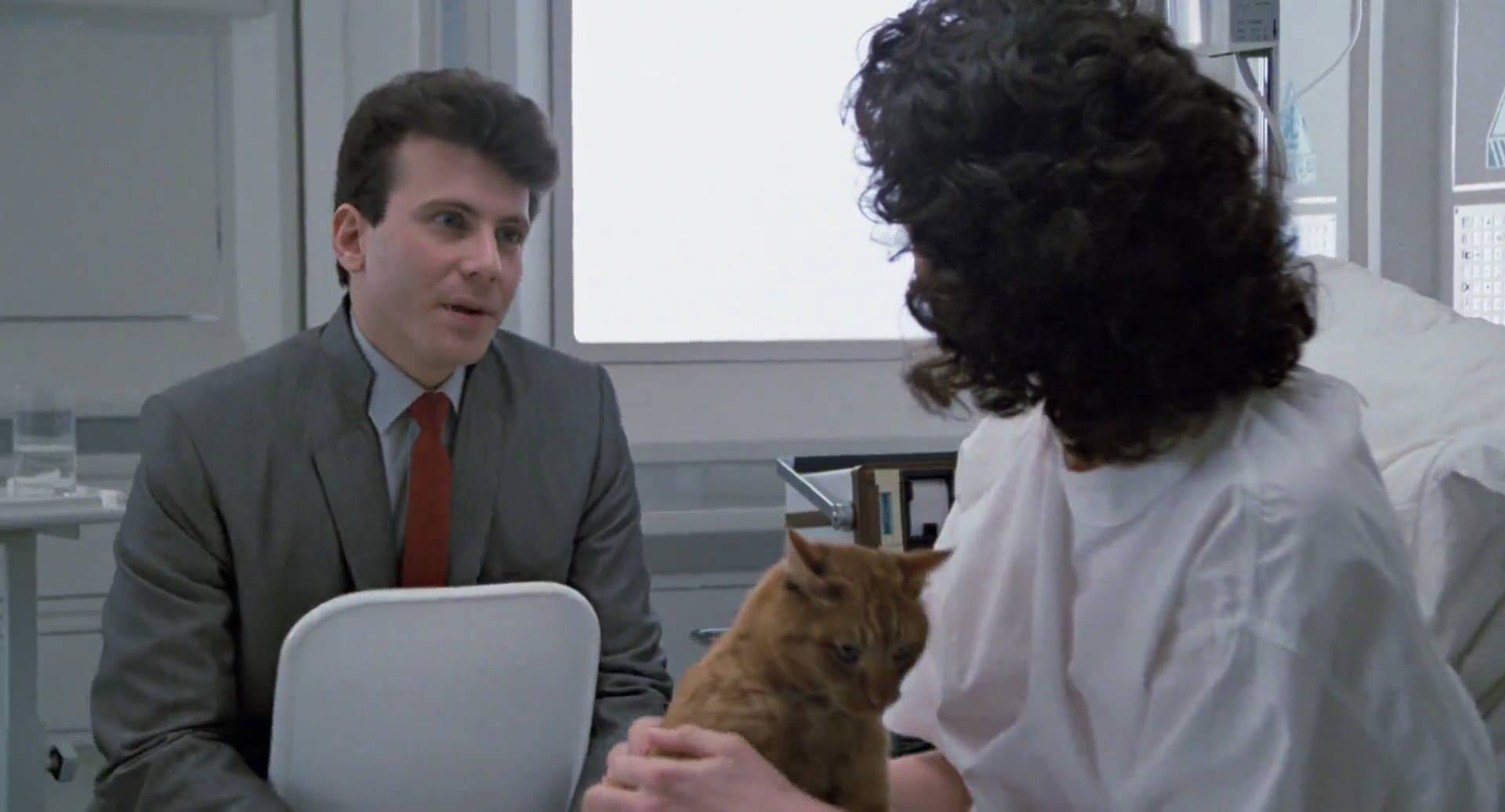
Screenshot from the 1986 sci-fi movie

(Image credit: 20th Century Fox)

After much oohing, aahing, and handwringing, the studio relented and selected Cameron to put together a treatment based on the impressive nature of his script for “The Terminator”.

In 1983, Cameron only needed three days to put together a 45-page treatment, which can be read here. The nuts and bolts of what would become “Aliens” are mostly present in this document, but Fox turned its nose up at the filmmaker’s proposal. The studio certainly wasn’t escaping allegations that it looked for more reasons not to do the movie than to proceed.

What “Aliens” required was a champion from within – somebody to convince the studio execs that they were leaving money on the table by ignoring this franchise. This came with the hiring of producer Larry Gordon, who pushed for the sequel in the four walls of the boardroom.

After the success of “The Terminator”, Cameron returned to the fray as writer-director, while his then-girlfriend-soon-to-be-wife Gail Anne Hurd boarded the film as a producer.

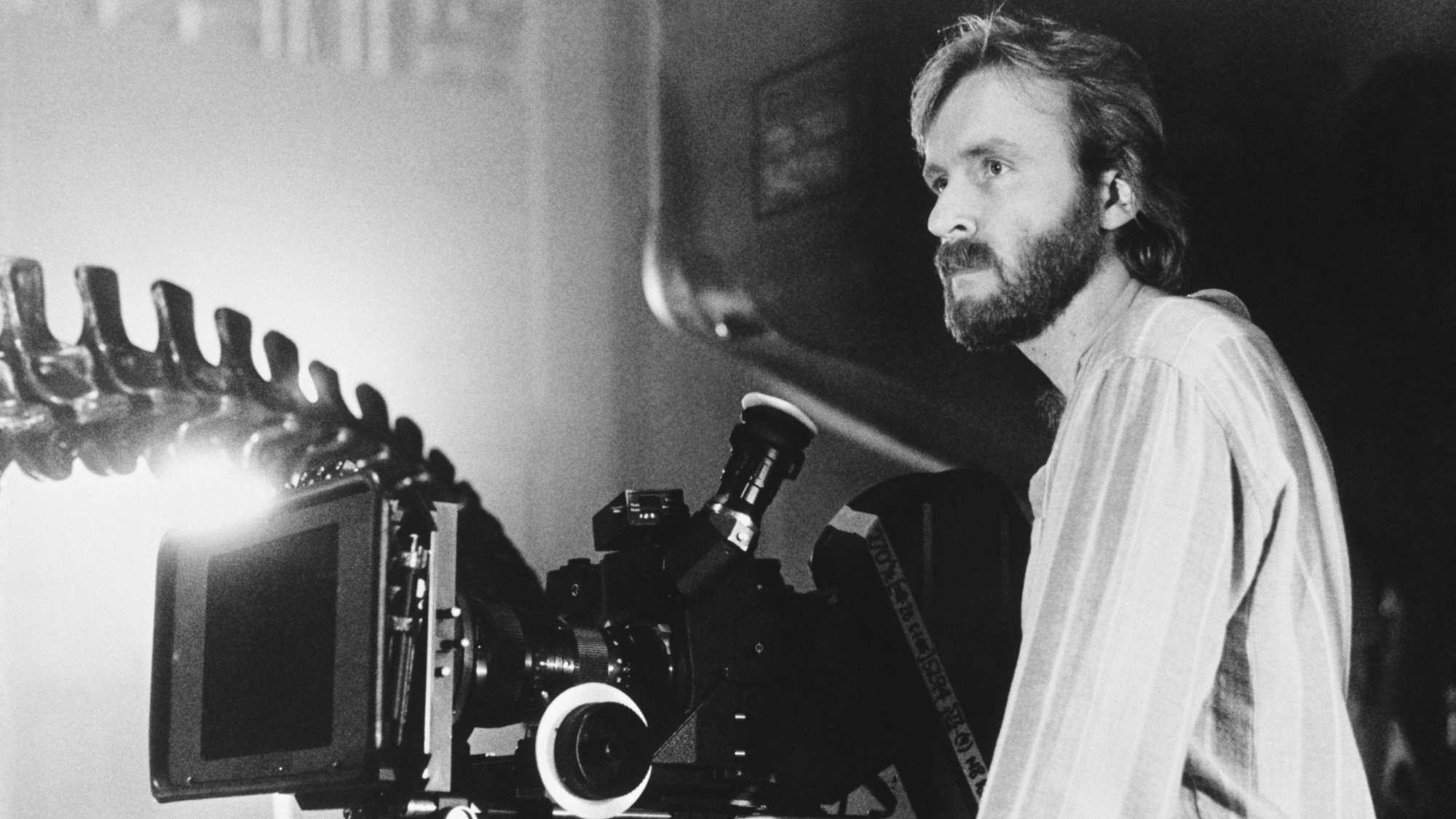
Director James Cameron on the set of his film Aliens.

(Image credit: Getty Images (Bob Penn))

With the script submitted and Cameron cocked, locked, and ready to shoot in 1985, a new problem arose: budget. Cameron’s camp argued that “Aliens” could be done for $15.5 million, but Fox’s bean counters feared it would be closer to $35 million, and nobody considered the poor billionaires at stake.

Fox offered $12 million. “We walked out and said, ‘Thanks, we’ll do something else,'” Cameron told the Los Angeles Times.

Behind the scenes, Gordon managed to convince his bosses to fork out the extra money for the production. With that hurdle successfully navigated, Cameron was back in the driver’s seat and ready to head off to LV-426.

Screenshot from the 1986 sci-fi movie

(Image credit: 20th Century Fox)

Next though, Fox decided to suggest the unthinkable at the time: “Aliens” without Sigourney Weaver. It’s a decision that reeks of a straight-to-video sequel, the kind of thing you’d expect to be fronted by a Kevin Sorbo type.

Cameron, on the other hand, was under the impression that Weaver had been contractually locked in for a sequel, but that wasn’t the case at all. Now it was up to Cameron to convince Weaver to do the film. He met with Weaver, and the meeting seemed positive enough, but her agents wanted a big payday for her – and rightfully so. Fox refused, and so Cameron and Hurd quit… again; they weren’t going to make the movie without Weaver.

Frustrated but trying to roll the dice on this flailing project one last time, Cameron pulled a sneaky trick, as he revealed to GQ years later. Weaver shared the same agency as Arnold Schwarzenegger, so Cameron phoned Schwarzenegger’s agent and told him how he was about to start rewriting the “Aliens” script to remove Ripley entirely. The news travelled faster than a Xenomorph through a ventilation shaft.

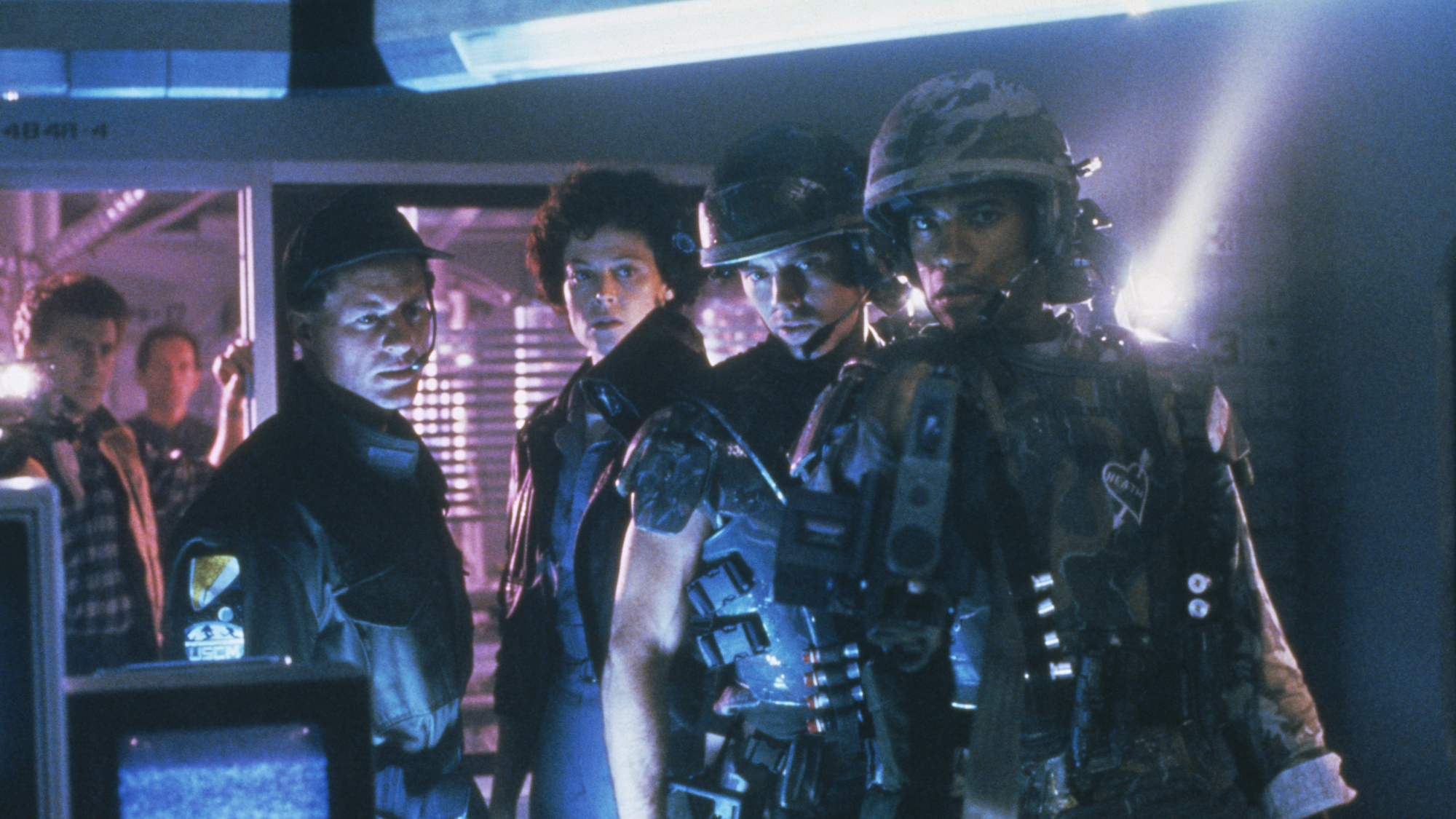
Ellen Ripley (Sigourney Weaver) and the marines in the film Aliens, directed by James Cameron.

(Image credit: Getty Images)

“The deal was done in 12 hours after that,” Cameron said. “So I never wrote a word of that hypothetical story that I said I was gonna do, that I had no intention of writing anyway. So anyway, it worked, and Sigourney got her million bucks, and everybody was happy.”

As far as most movie productions go, “Aliens” was mostly smooth sailing when it began to shoot. Deadlines were met, it didn’t go over budget, and the studio let them get on with it. The biggest challenge involved the final cut – with Fox wanting the picture to have a two-hour runtime to secure more theatrical screenings.

Cameron relented, taking out his scissors and cutting a few superfluous scenes, but the film still wasn’t quite at the magic mark. Having cut everything that he could, Cameron explained that any further amendments would destroy the story and damage the integrity of the movie. This time, Fox didn’t argue and stuck with the filmmaker.

Screenshot from the 1986 sci-fi movie

(Image credit: 20th Century Fox)

History confirms the right call was made here. The franchise now follows the blueprint laid by Cameron’s “Alien” more than Ridley Scott’s “Jaws in space” foundation. While there’s always a survival element in these movies, the action-centric approach is a critical part of the series’ DNA. Sure, the protagonists remain scared, but they receive the opportunity to light up the Xenomorphs and show those ugly monsters who’s the boss.

Looking back now, it’s unbelievable to think that Fox almost tanked “Aliens” with its studio shenanigans. A classic emerged from the chaos of inflated egos, penny-pinching, and blood pressure-raising frustration.

It’s proof that in Hollywood, no one can hear you scream (nor do they care), so it’s up to you to find a way to survive.

Category: NEWS | No Comments »

Satellite News
Privacy Overview

This website uses cookies so that we can provide you with the best user experience possible. Cookie information is stored in your browser and performs functions such as recognising you when you return to our website and helping our team to understand which sections of the website you find most interesting and useful.