Targeting a critical talent drain driven by a rapidly expanding domestic private aerospace ecosystem, India’s Department of Space (DoS) enacted an emergency administrative directive on Tuesday, July 14, 2026, to […]
According to corporate operational data consolidated from financial filings, SpaceX finalized an unprecedented operational tempo during the full-year 2025 lifecycle. The commercial launch provider successfully transitioned its partially reusable Falcon […]
On Friday, July 17, 2026, the commander of the U.S. Space Force (USSF) Combat Forces Command declared that recent multi-domain joint deployments in the Middle East mark a decisive return […]
Thanks to the James Webb Space Telescope (JWST), astronomers have been given a glimpse of the mechanisms that supermassive black holes use to feed themselves. The observations could help scientists discover how supermassive black holes with masses millions, often even billions, of times that of the sun grew so fast so soon after the Big Bang.
While all large galaxies have supermassive black holes at their hearts, some are slumbering giants, consuming little surrounding gas and dust, while others are ravenously feeding and acting as the engines of bright central galactic regions called active galactic nuclei (AGN). These feeding black holes also blast matter from their poles in jets that can drive gas and dust — the raw material needed for star formation — out of their host galaxies, thus cutting off star birth and effectively “killing” these galaxies.
Plus, the powerful cosmic titans get really puzzling when astronomers using the JWST spot them before the universe was even 1 billion years old. That’s because the mechanisms by which black holes devour matter to grow and then merge to create even more massive black holes should take at least 1 billion years to achieve supermassive status. This is even more confusing because theories also say the most ravenously feeding black holes (and thus the fastest growing) should also push the matter they use for this growth away, in effect putting themselves on a diet. So, with all this in mind, how did supermassive black holes grow so rapidly in the early universe?
One explanation suggests supermassive black holes push away gas, starving themselves as predicted, but also that this matter eventually cools and falls back to the black hole. That would allow for another period of feeding and thus growth.
This explanation further suggests that as this gas cools down, it forms “streamers,” or filaments, of gas just a few hundred light-years wide but which stretch thousands of light-years long. These would fall back to the center of the galaxy and form a swirling disk around its incumbent black hole, once again feeding it and triggering a new period of growth. This would then restart the jets from the black hole, which would again cut off the cosmic titan’s food supply, allowing the whole process to begin once more.
The process would in essence be a self-regulating cycle of feasting followed by fasting. However, the connection between these filaments and supermassive black holes has been elusive, meaning this mechanism has resisted confirmation.
“What JWST is revealing is that black holes may be the ultimate cosmic recyclers,” team leader Julie Hlavacek-Larrondo of the Université de Montréal said in a statement. “They release enormous amounts of energy that heat their surroundings, yet that same gas can later cool into thin filaments that fall back inward and feed the black hole again. We are finally seeing this self-sustaining cycle in action.”
A dieting supermassive black hole
To solve the mystery of feasting black holes, the JWST turned its attention to a relatively close AGN situated at the heart of the central galaxy of the Centaurus Cluster, NGC 4696, located just 145 million light-years from Earth.
The Hubble Space Telescope previously studied this galaxy, uncovering a strange, hook-shaped swirl of gas near the central supermassive black hole of NGC 4696.
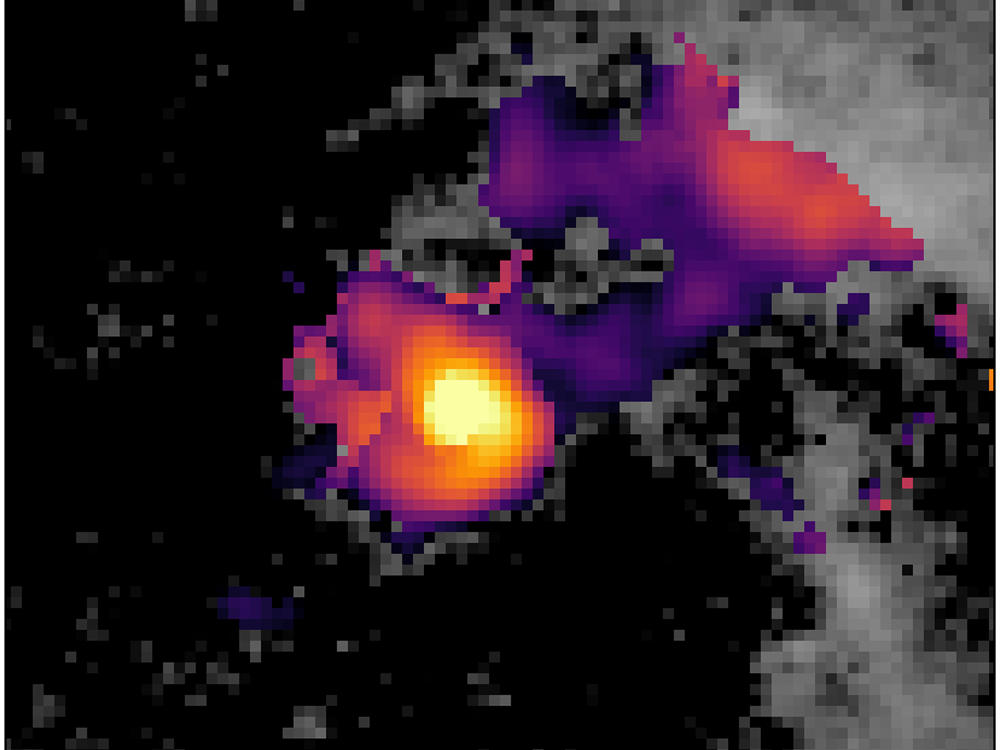
The JWST followed up this discovery by producing a detailed map of gas flowing at the heart of the galaxy. This revealed the hook-shaped feature is around 800 light-years wide and is composed of gas moving at incredible speeds of around 1.3 million miles per hour (600 kilometers per second).
More excitingly, the swirl of gas appears to be connected to a vast filament of material falling in toward the central supermassive black hole.
The heart of the galaxy NGC 4696 in a combined view from the JWST and Hubble. (Image credit: NASA/ESA/CSA/STScI/J. Hlavacek-Larrondo, et al. 2026)
The team tested the JWST observations against a computer simulation, finding gas in the infalling filament scenario would indeed take a shape similar to that seen in NGC 4696.
“JWST is now showing us the final link of this closed loop,” team member Helen Russell of the School of Physics and Astronomy at the University of Nottingham in the U.K. said in the statement. “The vast filamentary network of gas flows ultimately funnels gas down to a disk that fuels the black hole.”
Aug. 12, 2026, offers a rare double-header for skywatchers across northeastern North America: a partial solar eclipse during the afternoon followed, hours later, by the peak of the Perseid meteor shower beneath dark summer skies. The eclipse is part of a total solar eclipse happening in eastern Greenland, western Iceland and northern Spain.
“The neat thing about seeing a partial eclipse, especially one that is total somewhere else, is that you get to join in with the whole event that’s going on,” Tyler Nordgren, astronomer and eclipse artist at Space Art Travel Bureau, told Space.com. “It is a worldwide event, and you can get a sense of the three?dimensional nature of the universe.”
Together, the two events make a perfect excuse for an overnight astronomy road trip — whether that means heading into the mountains, camping beside a lake or escaping to a remote coastline. Pack a reclining camp chair, warm layers and plenty of bug spray, but before you do anything else, book a campsite because peak Perseids night can be one of the busiest camping nights of the year.
Do take precautions with the solar eclipse. “It will not be safe to look at with the naked eye, and it will not be safe to photograph with a camera that doesn’t have a solar filter on it,” Nordgren explained. “If you’ve got eclipse glasses left over from 2024, take them out, point them at a bright light bulb, and make sure there is no light coming through any pin pricks or scratches.”
REMEMBER: During a partial solar eclipse, it is never safe to look directly at the sun without proper solar viewing protection, such as certified eclipse glasses or approved solar filters. Read our guide on how to observe the sun safely.
1. Gros Morne National Park, Newfoundland
Western Brook Pond in Gros Morne National Park, Newfoundland. (Image credit: Marc Guitard via Getty Images)
Location: Newfoundland, Canada
Max eclipse: 49% at 3:26 p.m. NDT
Sun position: 47° above the southwest horizon
Eclipse window: 2:20-4:28 p.m. NDT
Light pollution: 3.0 Bortle/SQM 21.89
Average August cloud cover: 74%
Gros Morne National Park combines relatively dark skies with the deepest eclipse in eastern North America, with nearly half of the sun obscured at maximum. Coastal viewpoints, lakeshores and elevated trails offer wide southwest-facing horizons for the afternoon eclipse, while the park’s low levels of artificial light make it well suited for Perseid viewing after midnight. The main drawback is Newfoundland’s often variable weather and relatively high average cloud cover.
2. Mount Carleton Dark-Sky Preserve, New Brunswick
The view from Mount Sagamook, in Mount Carleton Provincial Park, New Brunswick, Canada. (Image credit: Marc Guitard via Getty Images)
Location: Mount Carleton Provincial Park, New Brunswick, Canada
Max eclipse: 31% at 2:50 p.m. ADT
Sun position: 54° above the southwest horizon
Eclipse window: 1:48–3:49 p.m. ADT
Light pollution: 2.2 Bortle/SQM 21.97
Average August cloud cover: 63%
Mount Carleton Provincial Park has some of the darkest skies in Atlantic Canada, with Bortle 2 conditions across much of the preserve. Open areas around Mount Carleton and nearby lakes provide unobstructed southwest views for the eclipse, while the remote setting is perfect for Perseid observing later that night. Campgrounds inside the park make it practical for an overnight trip.
3. Fundy Dark-Sky Preserve, New Brunswick
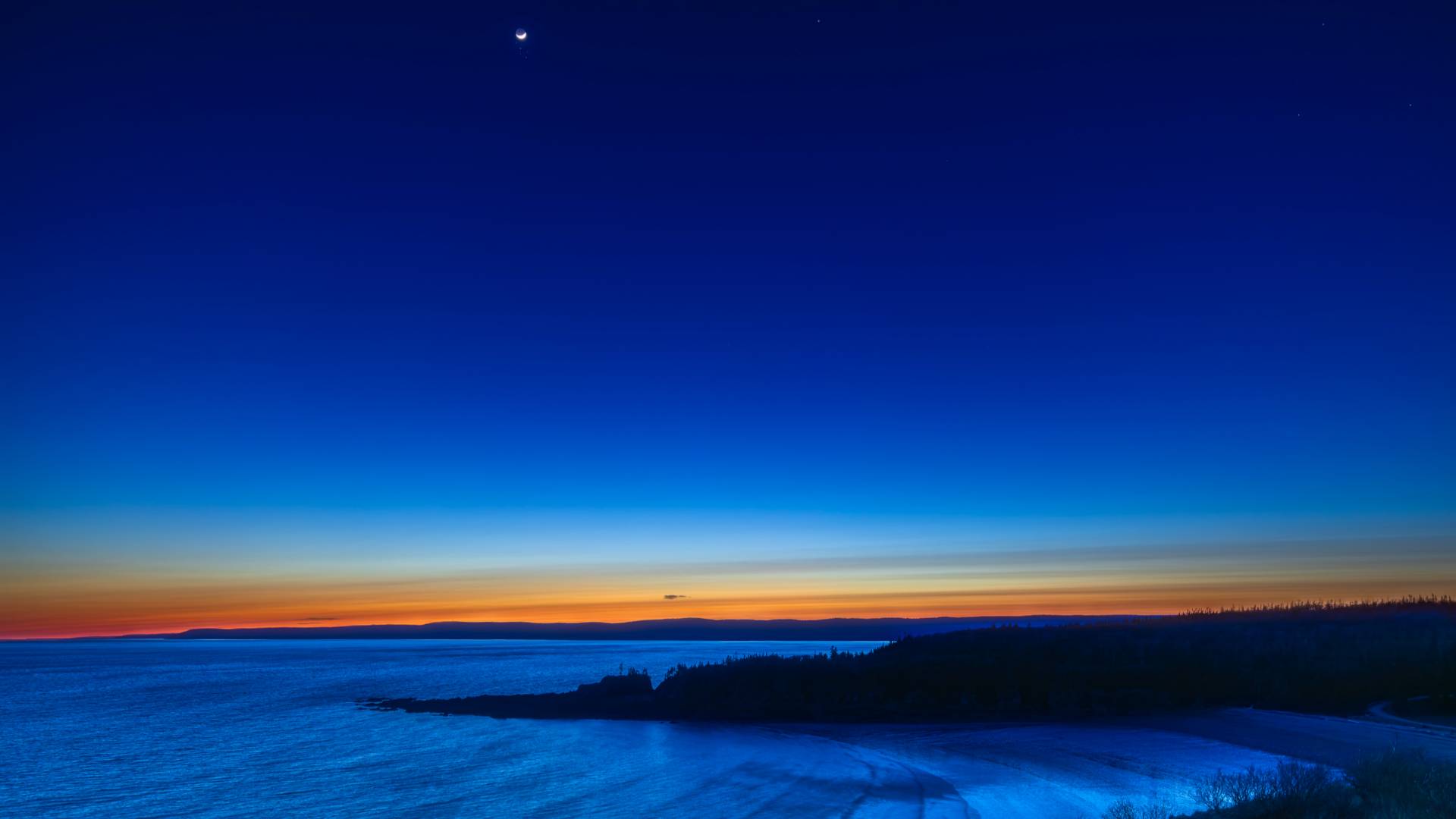
Twilight at sunset over Cape Enrage on the Bay of Fundy near Alma, New Brunswick. (Image credit: Alan Dyer/VWPics/Universal Images Group via Getty Images)
Location: Fundy National Park, Alma, New Brunswick, Canada
Max eclipse: 31% at 2:56 p.m. ADT
Sun position: 54° above the southwest horizon
Eclipse window: 1:54-3:54 p.m. ADT
Light pollution: 3.1 Bortle/SQM 21.88
Average August cloud cover: 56%
Fundy National Park offers reasonably dark skies and accessible observing locations along the Bay of Fundy coast. Open areas around Wolfe Lake and Chignecto Campground provide good visibility toward the southwest during the eclipse, while the surrounding dark-sky corridor supports decent Perseid observing conditions after dark. Coastal “Fundy fog” and changing maritime weather can occasionally affect visibility.
4. Kejimkujik National Park, Nova Scotia
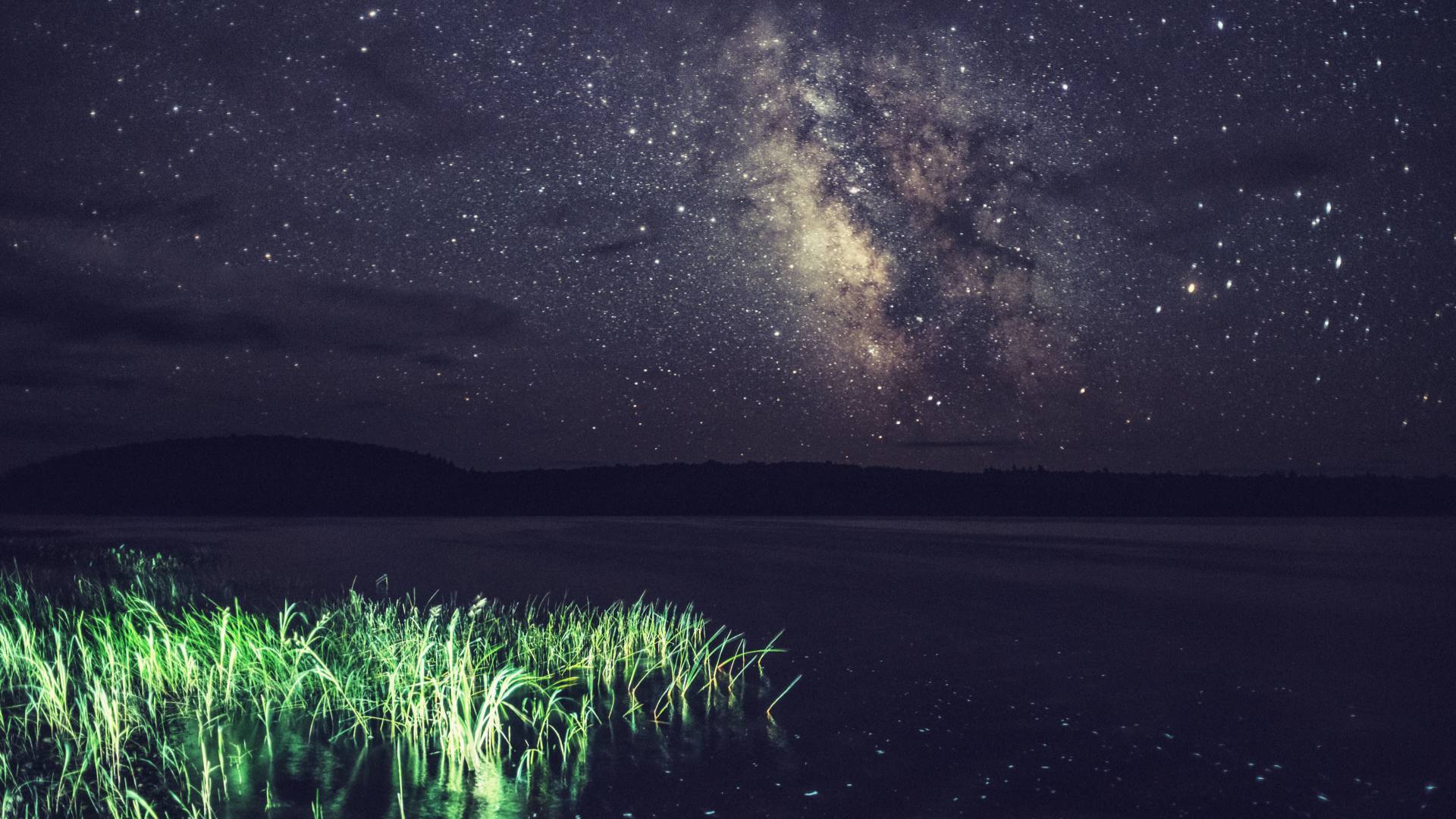
The Milky Way shines over Kejimkujik National Park. (Image credit: shaunl via Getty Images)
Location: Nova Scotia, Canada
Max eclipse: 28% at 2:58 p.m. ADT
Sun position: 54° above the southwest horizon
Eclipse window: 1:57-3:56 p.m. ADT
Light pollution: 2.2 Bortle / SQM 21.96
Average August cloud cover: 49%
Kejimkujik National Park remains one of the darkest accessible observing sites in Atlantic Canada, with low light pollution and broad lake horizons that are well-suited to meteor observing. The partial eclipse here approaches 30%, and the park’s lakeside campgrounds provide convenient overnight access for Perseid watching later that evening. Compared with many coastal locations in the region, Kejimkujik also has somewhat lower average cloud cover.
5. Acadia National Park, Maine
Ravens Nest Overlook in Acadia National Park. (Image credit: Stan Dzugan via Getty Images)
Location: Bar Harbor, Maine, US
Max eclipse: 24% at 1:54 p.m. EDT
Sun position: 56° above the southwest horizon
Eclipse window: 12:56-2:50 p.m. EDT
Light pollution: 4.1 Bortle / SQM 21.58
Average August cloud cover: 50%
Acadia National Park combines relatively accessible dark skies with open coastal horizons facing the eclipse. Elevated viewpoints around Cadillac Mountain and the Schoodic Peninsula offer clear sightlines toward the southwestern sky, while overnight observers can expect reasonably dark conditions for Perseid viewing by northeastern U.S. standards. Summer crowds and vehicle access restrictions around Cadillac Summit mean you should make a plan well in advance.
6. Mont Mégantic Dark Sky Reserve, Quebec
Mont Mégantic was one of the first-ever Dark Sky Reserves. (Image credit: Cavan Images via Getty Images)
Location: Le Haut-Saint-François, Quebec, Canada
Max eclipse: 22% at 1:49 p.m. EDT
Sun position: 57° above the southwest horizon
Eclipse window: 12:51-2:44 p.m. EDT
Light pollution: 3.4 Bortle / SQM 21.82
Average August cloud cover: 67%
Mont-Mégantic is one of the best-established astronomy sites in eastern North America, with protected dark skies and extensive observing infrastructure around the observatory and national park. Although the eclipse magnitude is moderate, the reserve’s dark nighttime conditions and elevated observing areas make it a strong location for Perseid observing after dark. Cloud statistics are less favorable than farther south in New England.
7. Adirondack Mountains, New York
The 2024 total solar eclipse from the Adirondack Sky Center and Observatory. (Image credit: Lev Radin/Pacific Press/LightRocket via Getty Images)
Location: Hamilton County, New York, US
Max eclipse: 15% at 1:47 p.m. EDT
Sun position: 59° above the southwest horizon
Eclipse window: 12:54-2:38 p.m. EDT
Light pollution: 2.8 Bortle / SQM 21.90
Average August cloud cover: 57%
The Adirondacks offer some of the darkest skies in the northeastern U.S., particularly around remote lakes and higher-elevation observing sites. While the partial eclipse will be modest, the region’s low artificial light levels and broad rural horizons make it a strong overnight option for the Perseids. Public campgrounds and astronomy events at local observatories may fill quickly around peak Perseid night. Check the Adirondack Sky Center & Observatory for events.
8. Catskill Mountains, New York
A star-filled summer night in New York’s Catskill Mountains. (Image credit: Gregory Adams via Getty Images)
Location: Catskill Mountains, Shandaken, New York, US
Max eclipse: 11% at 1:51 p.m. EDT
Sun position: 61° above the southwest horizon
Eclipse window: 1:02-2:37 p.m. EDT
Light pollution: 4.0 Bortle/SQM 21.59
Average August cloud cover: 65%
The Catskills provide relatively accessible dark skies within a few hours of major northeastern cities, making them a practical option for short-notice observing trips. The partial eclipse will be small, but reservoirs, ridgelines and open viewpoints offer decent southwest sightlines during the afternoon event. Overnight conditions are darker than much of the surrounding northeast region, particularly away from populated valleys.
9. Cherry Springs Dark Sky Park, Pennsylvania
Cherry Springs Dark Sky Park is perfect for glimpsing the eclipse and getting a good view of the Perseids. (Image credit: Yolanda Wang / 500px via Getty Images)
Location: Cherry Springs State Park, Pennsylvania
Max eclipse: 7% at 1:46 p.m. EDT
Sun position: 62° above the south-southwest horizon
Eclipse window: 1:04-2:27 p.m. EDT
Light pollution: 3.2 Bortle / SQM 21.86
Average August cloud cover: 66%
Cherry Springs State Park is one of the best-known observing locations in the eastern US, with very dark skies and unusually open horizons in all directions. Although the eclipse itself will be very shallow, the park is among the best suited for the Perseids later that night, when low light pollution and established observing fields provide excellent meteor-viewing conditions. Expect heavy attendance around the shower peak.
10. Assateague Island National Seashore, Maryland
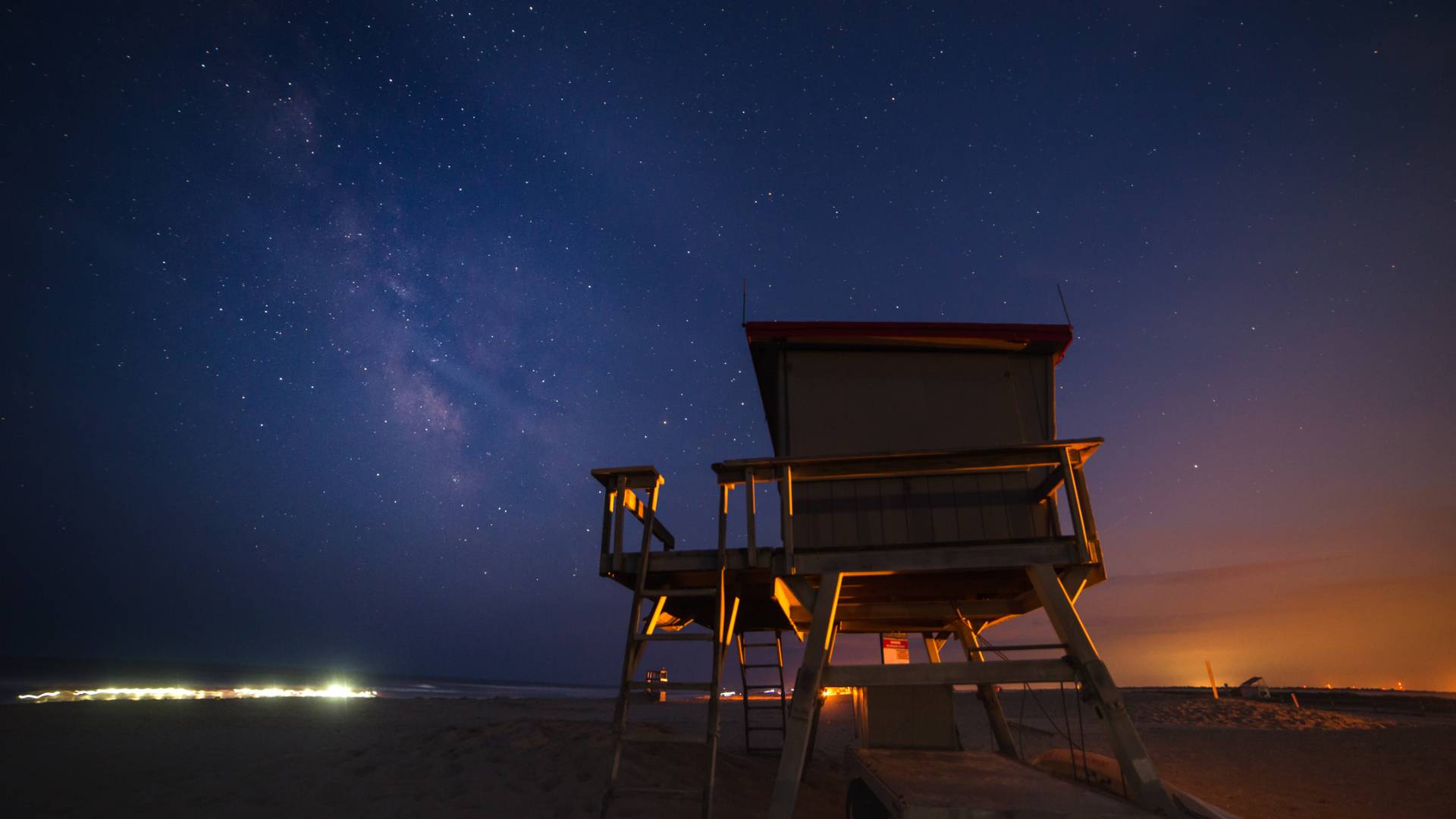
The Milky Way rises over Assateague Island. (Image credit: Zach Frailey via Getty Images) (Image credit: Zach Frailey via Getty Images)
Location: Worcester County, Maryland, US
Max eclipse: 4% at 1:57 p.m. EDT
Sun position: 64° above the southwest horizon
Eclipse window: 1:20-2:33 p.m. EDT
Light pollution: 4.1 Bortle/SQM 21.59
Average August cloud cover: 55%
Assateague Island offers unobstructed coastal horizons and relatively low light pollution for the mid-Atlantic region. The partial eclipse here will be a technical affair, but the island’s open beaches provide excellent naked-eye conditions for Perseid observing after dark, especially looking away from nearby coastal development. However, humidity, sea haze and mosquitoes can be significant factors during August observing sessions.
The biggest blockbusters of 2014 threw up a varied rogues’ gallery of bad guys. In “Transformers: Age of Extinction”, it was a reincarnated version of Optimus Prime’s perma-nemesis, Megatron, while Captain America faced off against a reborn Hydra infiltrating the upper echelons of the US government in “The Winter Soldier”. For Spider-Man, it was Electro, while Maleficent showed up in live-action to give Sleeping Beauty nightmares.
Christopher Nolan has never been one to go with the Hollywood crowd, however, and in his outer space opus “Interstellar”, the antagonist was time itself — or, to be more specific, Einstein’s theory of general relativity.
Nolan, whose Homeric epic “The Odyssey” makes landfall in theaters this week, has always been obsessed with time, and our perception of it. From “Memento”‘s backwards narrative to “Tenet”‘s time-flipping terrorists, the director has tended to steer clear of linear narratives. Even the three interweaving plotlines of his World War II drama, “Dunkirk”, unfold at completely different speeds. In short, Nolan is not a filmmaker you should ever set your clock by.
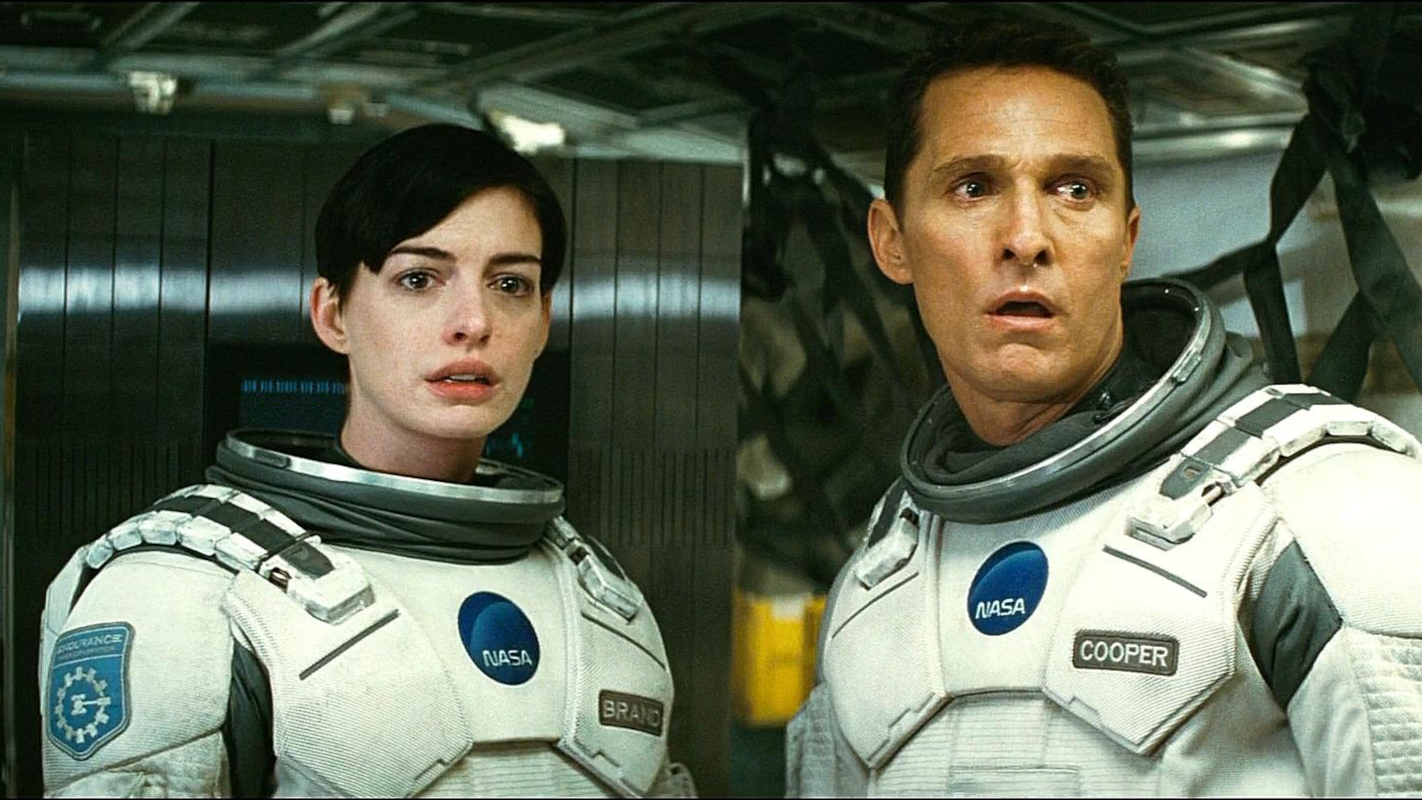
But time has never been as cruel as it is in “Interstellar”, where the fundamental constants of the universe combine to wreak havoc with human emotions. “Time is relative,” explains Anne Hathaway’s biologist/astronaut Amelia Brand. “It can stretch, and it can squeeze, but it can’t run backwards. It just can’t.”
She’s summed up “Interstellar” in a nutshell, so it’s not hard to see why this was the story Nolan wanted to tell when he added his own entry to the canon of cerebral cinematic sci-fi.
(Image credit: Paramount Pictures)
At one point in “Interstellar”‘s evolution, it seemed set to be a Steven Spielberg movie. Physicist Kip Thorne had originated the project with producer Lynda Obst, and the “Close Encounters of the Third Kind” director spent a year developing the movie with them. He even hired Nolan’s younger brother, Jonah (whose credits include “The Dark Knight” and “Westworld”), to write a script.
Spielberg ultimately dropped out — “It just didn’t stick with me, and I don’t know why,” he told Empire magazine — but Jonah knew the ideal replacement. “Jonah actually said, ‘If there comes a point where you decide not to make this movie, I can tell you who’s gonna grab it. He’s already bugging me about it. And that’s my brother Chris.’ The second I decided not to make it, Chris jumped on board, probably the next day. ‘Interstellar’ was a much better movie in Chris Nolan’s hands than it would have been in mine.”
In the film’s near future, humanity is literally running out of time. The Earth’s ecosystem is breaking down, with dust storms killing crops across the United States and causing major health issues among the survivors. Nolan even uses talking head footage of real-life survivors of the Dust Bowl that ravaged the US Midwest in the 1930s (taken from Ken Burns’ 2012 documentary “The Dust Bowl”) to add to the urgency of the situation.
(Image credit: Paramount Pictures)
But the remains of NASA — now forced into hiding — have a plan. They’ve discovered a stable wormhole near Saturn, and it leads to another galaxy. Probes have found planets on the other side, and some of them might — just might — be capable of supporting life.
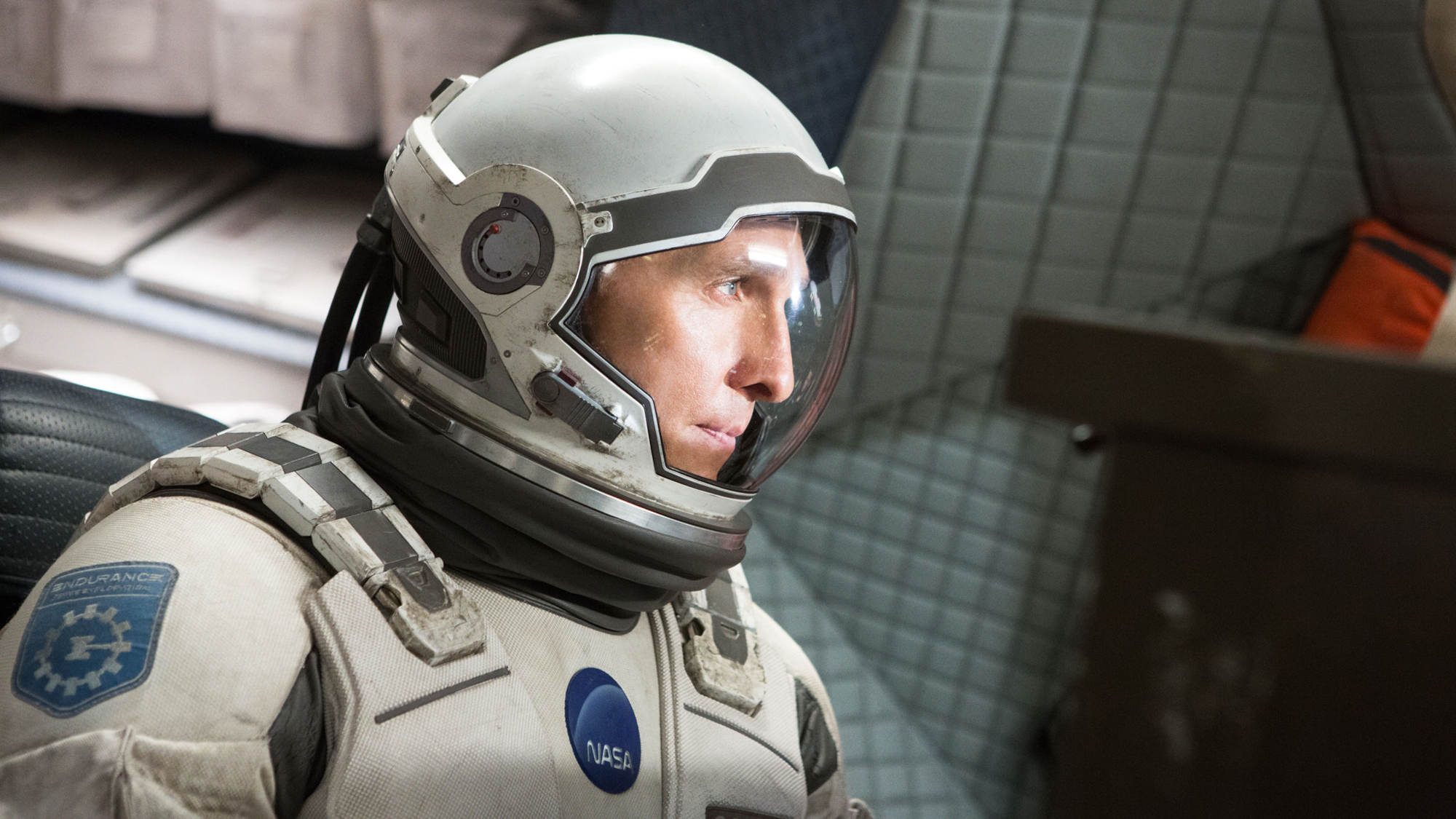
So when former pilot-turned-farmer Joseph Cooper (Matthew McConaughey) stumbles on NASA’s clandestine base (for reasons that will later become clear), he’s recruited for a mission checking in on the brave pioneers sent to investigate these strange new worlds. Unfortunately, this means leaving his kids behind.
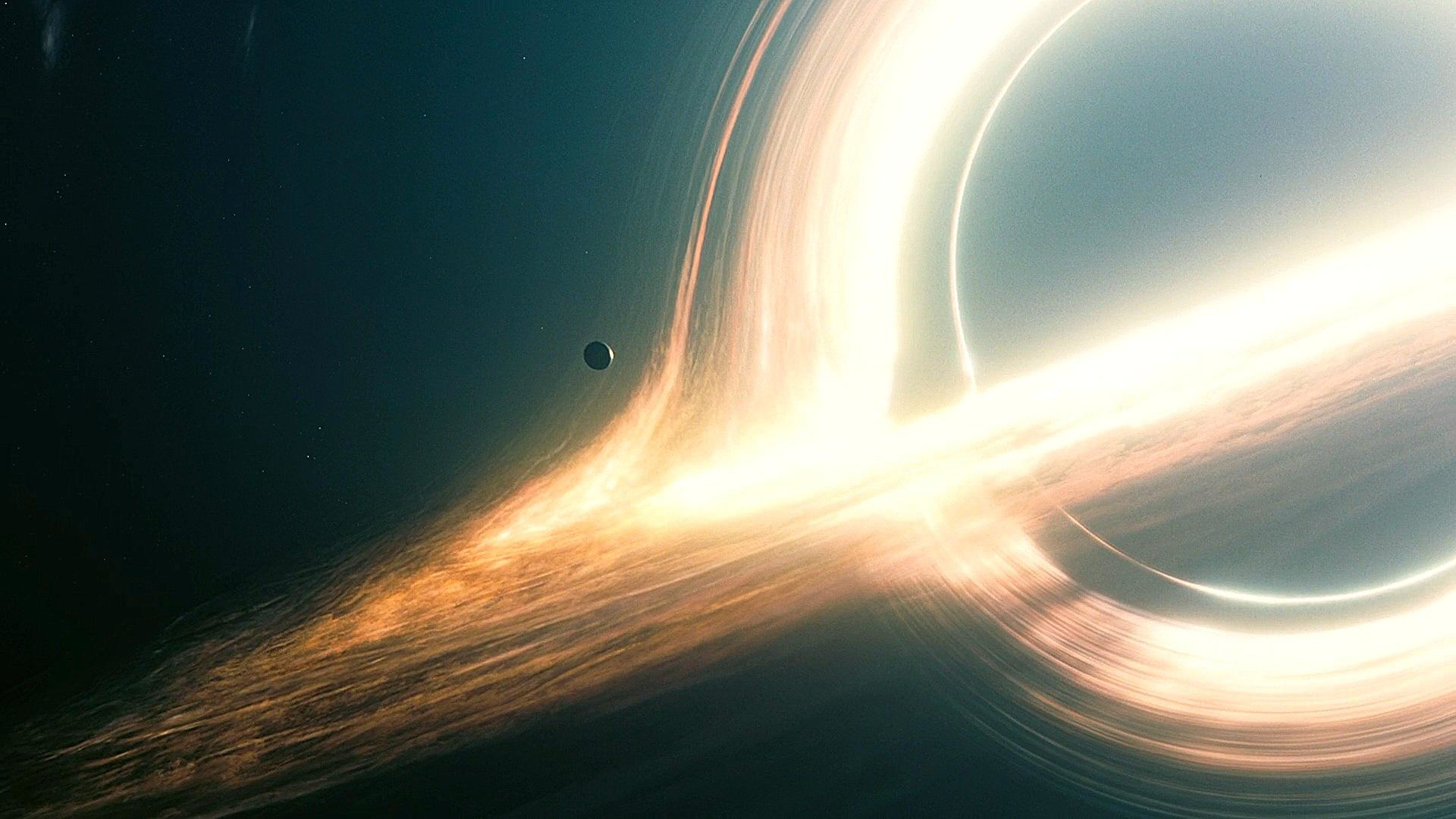
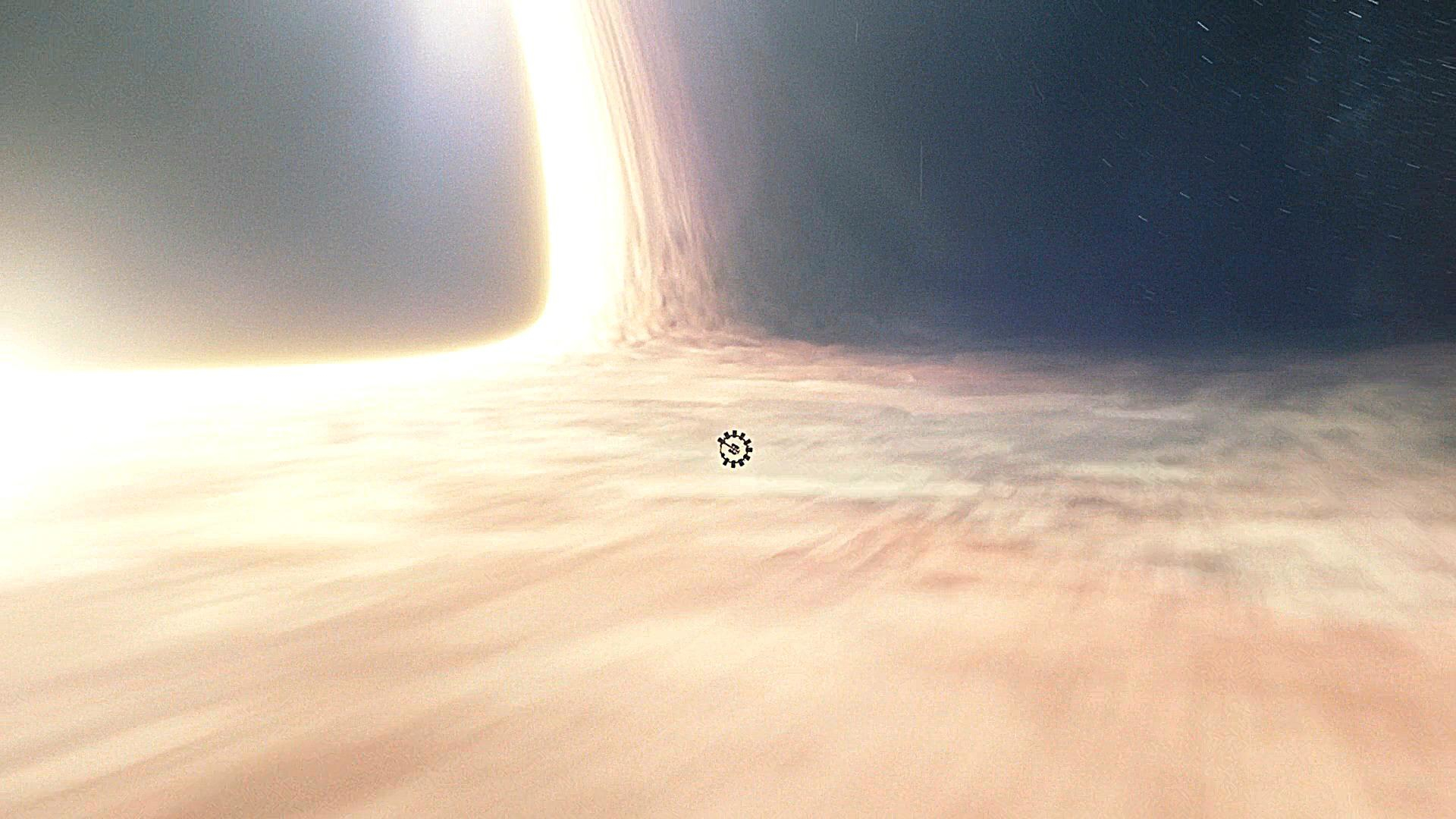
And this is where relativity becomes one of the harshest antagonists in movie history. The Endurance crew’s first destination, “Miller’s Planet”, orbits a black hole known as Gargantua. Its gravity is so intense that anything in its vicinity experiences extreme time dilation — to the extent that an hour on the planet’s surface is equivalent to seven years for everyone else. “We need to think of time as a resource, just like oxygen and food,” Brand says before they make landfall.
(Image credit: Paramount Pictures)
But in that old Hollywood tradition, not everything goes to plan on the surface, and by the time Cooper and Brand escape Gargantua’s influence — minus their late crewmate Doyle (Wes Bentley) — decades have passed on Earth. In an extremely powerful sequence, we see Cooper catching up on the last 20-plus years of life back home via video messages from his son, Tom (the young version played by Timothée Chalamet, the older version by Casey Affleck).
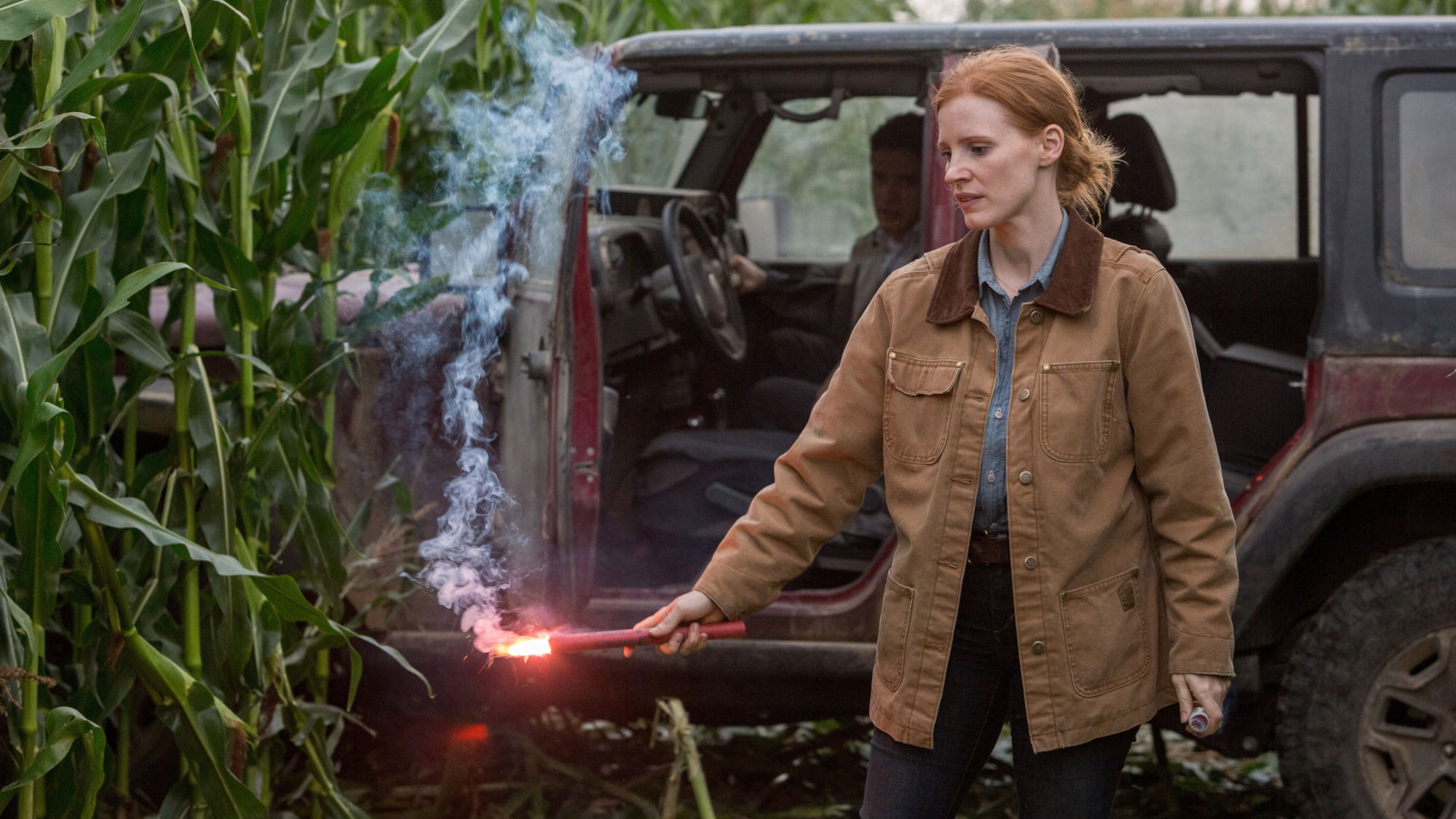
In a matter of minutes, Cooper learns about the birth and death of a grandchild, as well as the passing of his father-in-law. At the end of the reel, his heartbroken daughter Murphy (young version: Mackenzie Foy; adult version: Jessica Chastain; elderly version: Ellen Burstyn) sends her first message since he abandoned her for outer space. The reason for breaking radio silence? She’s now the same age he was when he left; her childhood vanished in the blink of an eye.
“Interstellar” makes a mockery of the myth that Nolan’s films are cold and emotionless. Relativity shows no mercy for family bonds, and McConaughey, Chastain, and Hathaway all deliver towering performances as they deal with its consequences. This is a human story told across a multi-dimensional canvas.
(Image credit: Paramount Pictures)
Even beyond their lives being thrown out of sync by time dilation — at the end of the movie, a still-40-something Cooper comes face-to-face with a nonagenarian Murph on her deathbed — they’re coming to terms with the fact that the whole mission was built on a lie.
NASA boss Dr Brand (Michael Caine) may have thought he was doing the right thing by pretending that his gravity equation could be solved and giving false hope that humanity might one day find a new home among the stars. But it doesn’t make it any less of a kicker when he confesses his grand betrayal, admitting on his deathbed that “Plan B” — sending embryos into the cosmos to extend the human race — was “Plan A” all along. Of course, whether he’s right or wrong, he’s a second-tier ‘bad guy’ compared to relativity.
Nolan went to extraordinary lengths to give his film a sound scientific footing. He consulted extensively with Thorne in order to generate a scenario where relativistic effects would be so extreme that minutes on a planet’s surface would equate to years back on Earth. “Kip, apart from being an incredible mind, is actually a very good explainer of difficult concepts, and he was very patient with all of us lesser beings,” producer Emma Thomas told SFX magazine. The Oscar-winning VFX team at D-Neg, meanwhile, turned their work modelling the accretion disc around Gargantua into an actual scientific paper.
(Image credit: Paramount Pictures)
By the time the film enters its endgame, it’s embracing tesseracts and five-dimensional superbeings, as Cooper uses gravity to communicate with Murph across time. In the process, he reveals that the “ghost” that helped him find NASA all those years ago was actually a future version of himself. Such diamond-hard sci-fi concepts are probably not, however, the reason that “Interstellar” has since — despite mixed reviews on release — become one of Nolan’s most popular films a decade later.
“What I’ve found is that people who let the film wash over them get the most out of it,” Nolan admitted in “The Nolan Variations” by Tom Shone, and the director may just have a point. While a cynic might have issues with the notion that love is a quantifiable force transcending the universe (anyone know the SI unit for that?), it’s impossible to deny the genius of “Interstellar”‘s use of high-level physics to explore the human condition.
It’s unlikely any of us will find ourselves in the vicinity of a black hole, but all of us know what it means to want more time with the people we love.
“The Odyssey” is in theaters from Friday, July 17. “Interstellar” is available to stream on Hulu and Paramount+ in the US, and Sky Cinema and HBO Max in the UK.
Artificial intelligence could easily fall into the trap of identifying non-life as life on other worlds, claim two researchers from Michigan State University who have tested AI on simulated life in a computer program.
“We had previously seen that AI has a big Achilles heel when it is trying to classify things that are unlike the things in its training examples,” Michigan’s Christoph Adami told Space.com. “We call these ‘out-of-distribution’ samples and it is just incredibly easy to get AI to misclassify.”
Adami is a computational biologist who uses computers to apply information theory to the study of evolution and biology. One of his leading tenets is that life can be defined by its ability to encode information and replicate it. To this end, he devised the Avida computer program in 1993. It runs digital organisms written as code that can replicate by copying themselves and competing for resources — in this case, CPU time — just like real life organisms. Although the use of digital life in evolutionary studies remains controversial, what it does provide Adami with is a huge dataset of simulated lifeforms that AI can be tested on.
Spending three months of computer analysis on a thousand parallel machines, Adami and his student Ankit Gupta asked AI to determine which programs in Avida had the properties of life, and which didn’t. The life and non-life programs have very similar coding, so the difference is not obvious — and this might very well be the case on another planet where life could have differences in biology to Earth life.
Adami and Gupta started out with programs representing a random sequence of molecules and asked the AI to classify them. They then set about tweaking that sequence of molecules to try and fool the AI into thinking it was seeing life, one change at a time, each time checking whether there had been a change in how confident the AI was that it was life or non-life.
“Within about 15 changes or so we can get AI to be perfectly confident of a life classification when in fact not a single time when it was being 100% confident was it actually life,” said Adami.
Furthermore, no matter the sequence they started with, the AI was constantly fooled.
Many in the scientific community stand by AI as an invaluable tool because it can process huge amounts of data and search for patterns in that data. Adami himself believes that AI has an important role to play, but as we see in everyday life, AI is prone to making things up and identifying patterns that don’t exist.
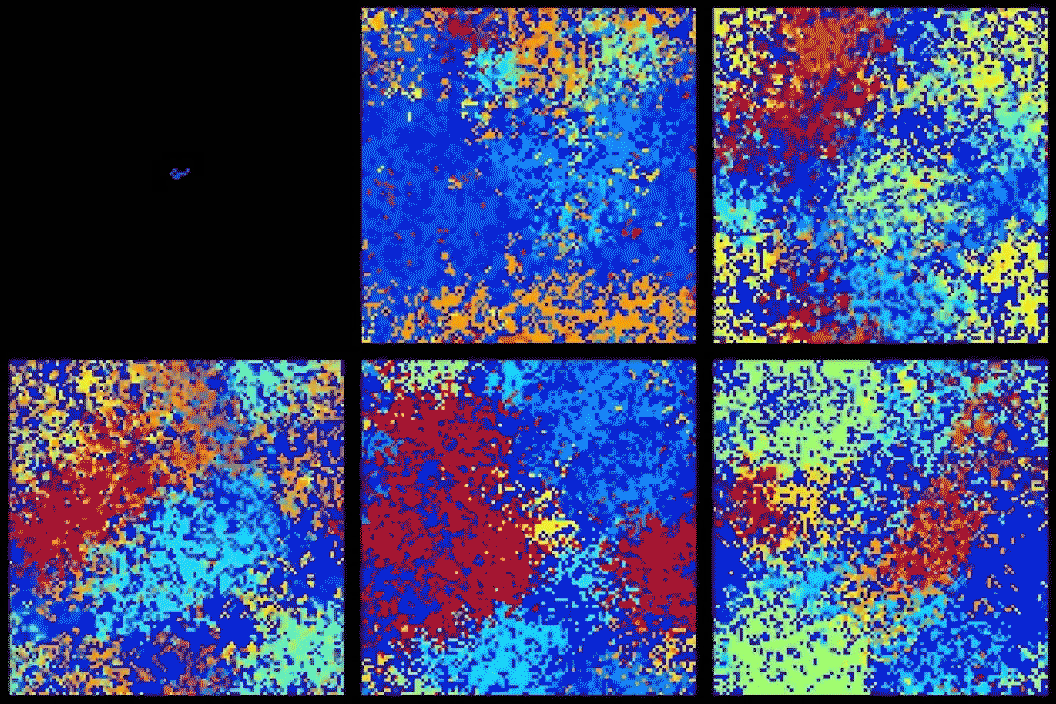
Digital organisms replicating and mutating over time in the Avida program. Each colored dot represents an organism of a particular genotype, and each time they mutate into a different type, they change color. (Image credit: Adami et al/Michigan State University)
This really comes down to what the AI has been trained on, said Adami. If you ask an AI about data it has been trained on, it usually provides a correct answer. For example, if you train AI to identify pictures of apples and then ask it to pick out the fruit from a dataset that also includes pictures of non-food items, it will answer correctly virtually all the time. However, if you replace the apple pictures with photos of bananas and ask it to identify the fruit, it will struggle and start to misidentify things.
That’s because the bananas represent “out of distribution” data. The AI wasn’t trained on bananas, which are a very different shape to apples, and therefore the AI doesn’t know what to make of them.
Similarly, we don’t know what alien microbes will look like, and they could be quite different to the terrestrial microbes that the AI has been trained on. In other words, the alien life would be out of distribution, and the AI would have no context for saying whether any particular collection of molecules is life or not.
“You need to know your training data, and if you know that your testing data is part of the same distribution as the training data, then you’ll be fine,” said Adami. “But you can’t guarantee that with extraterrestrial life.”
This could pose a problem for missions designed to look for life.
If a Mars rover goes to the red planet and cuts open a rock and directly sees something that looks like microbial life as we know it, then the answer will be clear-cut and can be tested using traditional methods. However, many attempts to detect life will probably not be so hands-on, relying on mass spectrometry data to identify molecules and processes related to life. This could range from attempts to detect life in the atmosphere of Venus, or in the ocean of Europa, or on exoplanets via the Habitable Worlds Observatory, which NASA aims to launch in the 2040s to directly image exoplanets in the habitable zone of stars.
“This means that if there were an AI on a mission looking at particular mass spectrometry samples, then there’s a very great chance that while it has been trained on the ground on a number of biotic and abiotic samples, it could still return a positive verdict when it has absolutely nothing to do with life,” says Adami.
The next step, said Adami, is to move out of the digital world and run the same test with real-world data.
Adami and Gupta will be presenting their findings in August at the 2026 Conference on Artificial Life, which is being held in Waterloo, Canada.
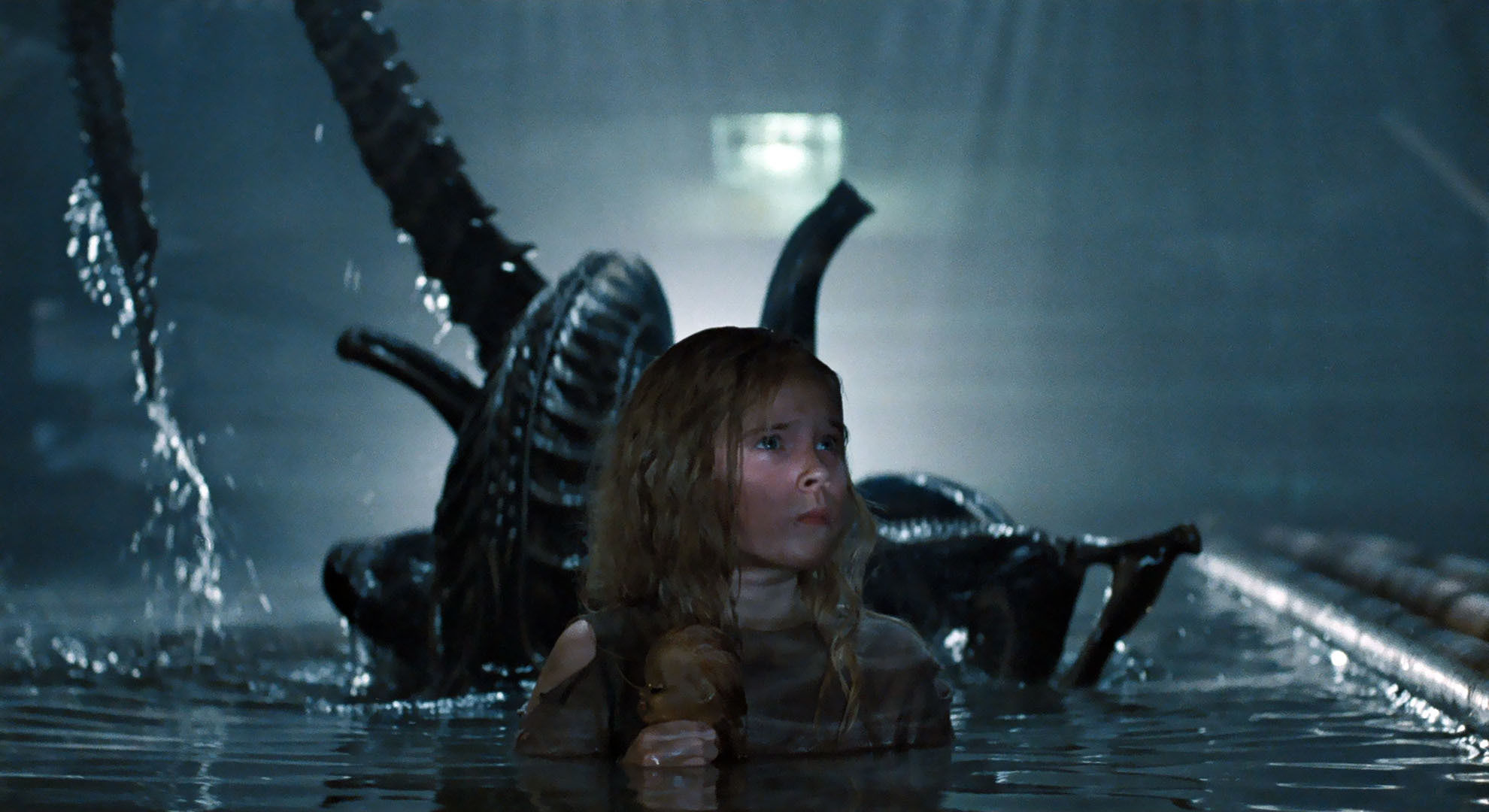
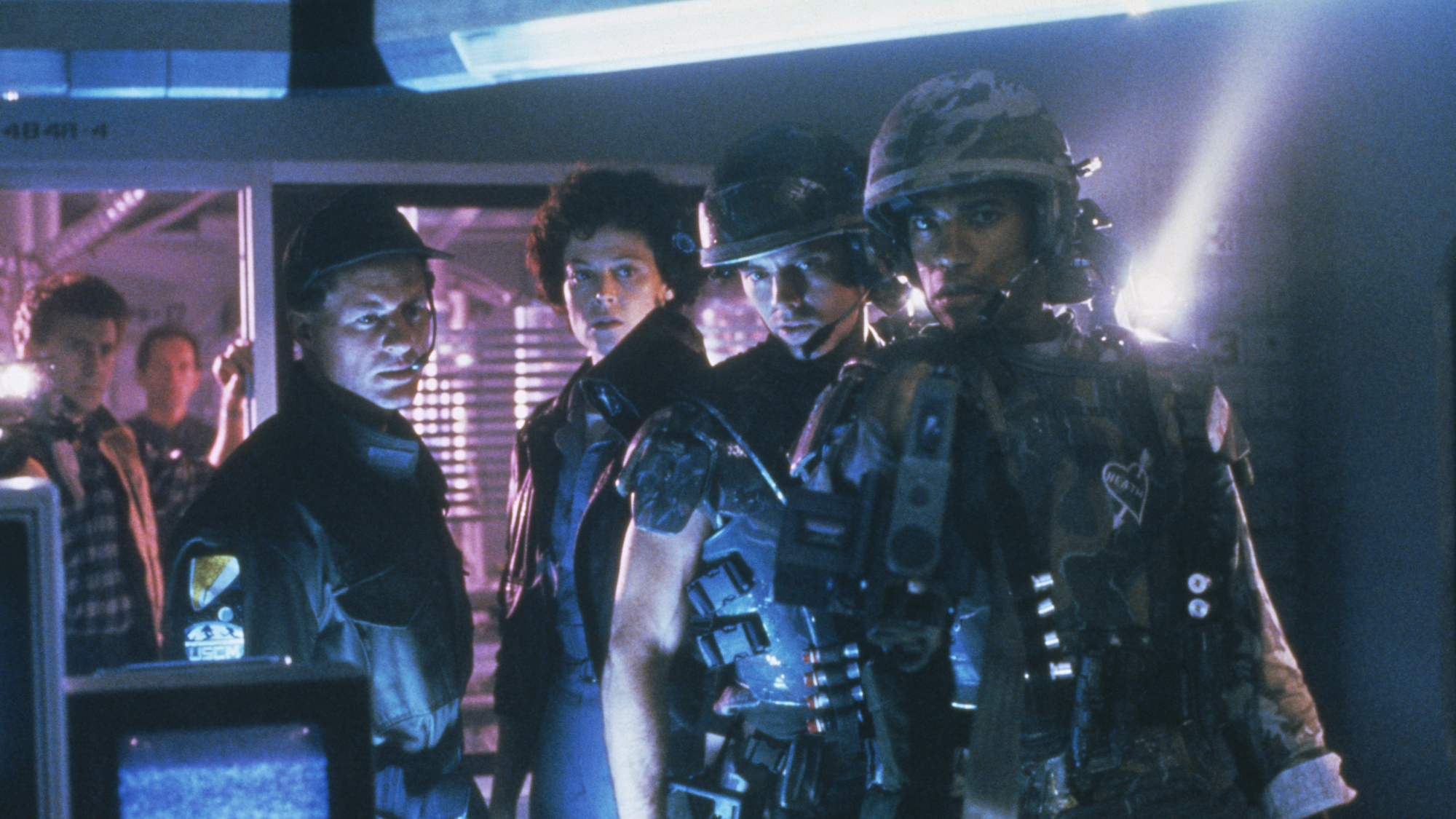
Where does James Cameron’s “Aliens” rank among the other Alien movies? That depends on who you ask. Some might say it’s the best, while others put it just behind the original (spoiler alert: it’s the best). Regardless, there’s no denying that this 1986 film shifted gears, moving the franchise from horror to horror-tingedsci-fi action and paving an alternate path for the future.
As Cameron stated in aninterview with Lofficier, the plan always was “to do a film that was not as scary… it’s scary, but it’s not as scary, but more intense, and I like to use the word, exhilarating. Because I think you get exhilarated by the intensity of the kind of action that’s in this film.”
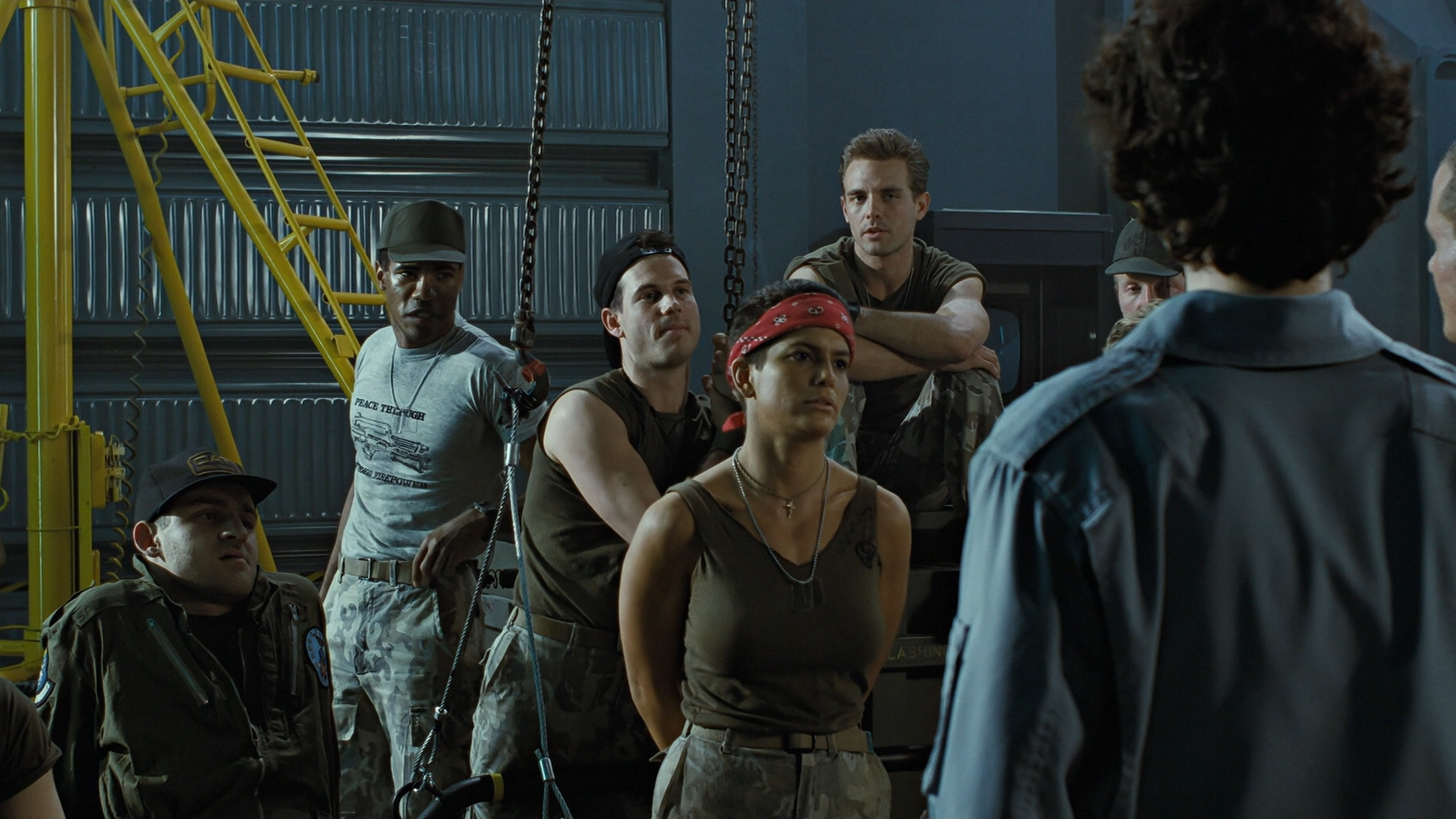
In terms of story progression, the sequel’s shake-up makes complete sense. Sigourney Weaver’s Ellen Ripley survived the Xenomorph in “Alien”, but now she must conquer her fears and face the grim creature once again. This time, she has allies and firepower on her side, though most of those Colonial Marines turn out to be about as useful as French kissing a beehive.
(Image credit: 20th Century Fox)
“Aliens” exploded into a monster hit, both financially and critically, suggesting that Cameron has a Midas touch when it comes to sequels. Famous movie critic Roger Ebert called it “a superb example of filmmaking craft”, and it’s tough to argue that point. Yet what’s amazing to ponder is how “Aliens” nearly fell apart several times before it actually happened.
Despite 1979’s “Alien” turning a big profit on paper, Hollywood’s accounting practices are more baffling than Palpatine’s return in “Star Wars: The Rise of Skywalker”.
Somehow, “Alien” was deemed a flop, and 20th Century Fox remained conflicted about a sequel – so much so that it almost sold the rights to the “Rambo” producers of all people (imagine the crossover potential, though, as John Rambo guns down a horde of Xenomorphs while Jerry Goldsmith’s iconic score blares in the background).
(Image credit: 20th Century Fox)
After much oohing, aahing, and handwringing, the studio relented and selected Cameron to put together a treatment based on the impressive nature of his script for “The Terminator”.
In 1983, Cameron only needed three days to put together a 45-page treatment, which can be read here. The nuts and bolts of what would become “Aliens” are mostly present in this document, but Fox turned its nose up at the filmmaker’s proposal. The studio certainly wasn’t escaping allegations that it looked for more reasons not to do the movie than to proceed.
What “Aliens” required was a champion from within – somebody to convince the studio execs that they were leaving money on the table by ignoring this franchise. This came with the hiring of producer Larry Gordon, who pushed for the sequel in the four walls of the boardroom.
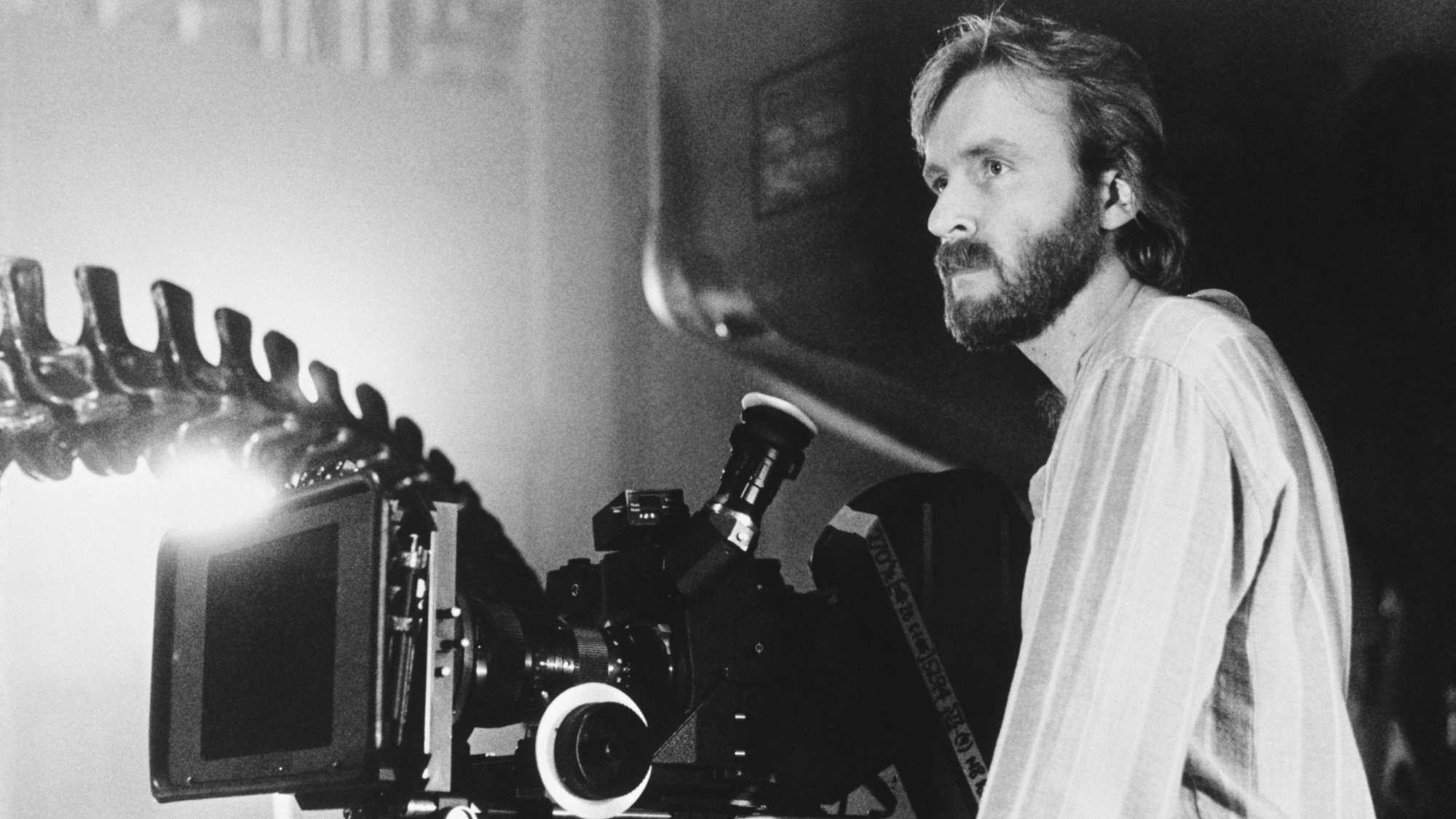
After the success of “The Terminator”, Cameron returned to the fray as writer-director, while his then-girlfriend-soon-to-be-wife Gail Anne Hurd boarded the film as a producer.
(Image credit: Getty Images (Bob Penn))
With the script submitted and Cameron cocked, locked, and ready to shoot in 1985, a new problem arose: budget. Cameron’s camp argued that “Aliens” could be done for $15.5 million, but Fox’s bean counters feared it would be closer to $35 million, and nobody considered the poor billionaires at stake.
Fox offered $12 million. “We walked out and said, ‘Thanks, we’ll do something else,'” Cameron told the Los Angeles Times.
Behind the scenes, Gordon managed to convince his bosses to fork out the extra money for the production. With that hurdle successfully navigated, Cameron was back in the driver’s seat and ready to head off to LV-426.
(Image credit: 20th Century Fox)
Next though, Fox decided to suggest the unthinkable at the time: “Aliens” without Sigourney Weaver. It’s a decision that reeks of a straight-to-video sequel, the kind of thing you’d expect to be fronted by a Kevin Sorbo type.
Cameron, on the other hand, was under the impression that Weaver had been contractually locked in for a sequel, but that wasn’t the case at all. Now it was up to Cameron to convince Weaver to do the film. He met with Weaver, and the meeting seemed positive enough, but her agents wanted a big payday for her – and rightfully so. Fox refused, and so Cameron and Hurd quit… again; they weren’t going to make the movie without Weaver.
Frustrated but trying to roll the dice on this flailing project one last time, Cameron pulled a sneaky trick, as he revealed to GQ years later. Weaver shared the same agency as Arnold Schwarzenegger, so Cameron phoned Schwarzenegger’s agent and told him how he was about to start rewriting the “Aliens” script to remove Ripley entirely. The news travelled faster than a Xenomorph through a ventilation shaft.
(Image credit: Getty Images)
“The deal was done in 12 hours after that,” Cameron said. “So I never wrote a word of that hypothetical story that I said I was gonna do, that I had no intention of writing anyway. So anyway, it worked, and Sigourney got her million bucks, and everybody was happy.”
As far as most movie productions go, “Aliens” was mostly smooth sailing when it began to shoot. Deadlines were met, it didn’t go over budget, and the studio let them get on with it. The biggest challenge involved the final cut – with Fox wanting the picture to have a two-hour runtime to secure more theatrical screenings.
Cameron relented, taking out his scissors and cutting a few superfluous scenes, but the film still wasn’t quite at the magic mark. Having cut everything that he could, Cameron explained that any further amendments would destroy the story and damage the integrity of the movie. This time, Fox didn’t argue and stuck with the filmmaker.
(Image credit: 20th Century Fox)
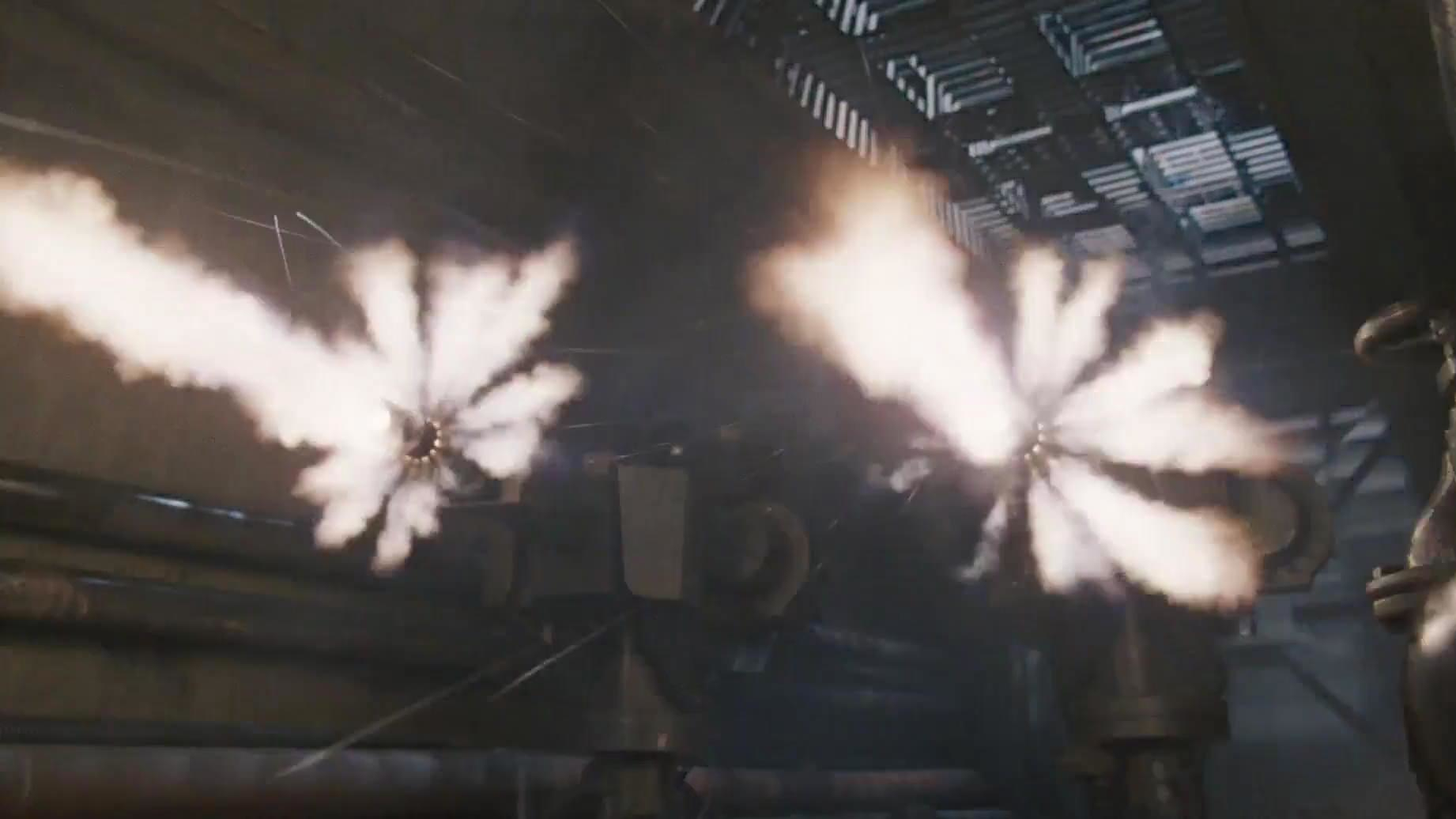
History confirms the right call was made here. The franchise now follows the blueprint laid by Cameron’s “Alien” more than Ridley Scott’s “Jaws in space” foundation. While there’s always a survival element in these movies, the action-centric approach is a critical part of the series’ DNA. Sure, the protagonists remain scared, but they receive the opportunity to light up the Xenomorphs and show those ugly monsters who’s the boss.
Looking back now, it’s unbelievable to think that Fox almost tanked “Aliens” with its studio shenanigans. A classic emerged from the chaos of inflated egos, penny-pinching, and blood pressure-raising frustration.
It’s proof that in Hollywood, no one can hear you scream (nor do they care), so it’s up to you to find a way to survive.
 Targeting a critical talent drain driven by a rapidly expanding domestic private aerospace ecosystem, India’s Department of Space (DoS) enacted an emergency administrative directive on Tuesday, July 14, 2026, to […]